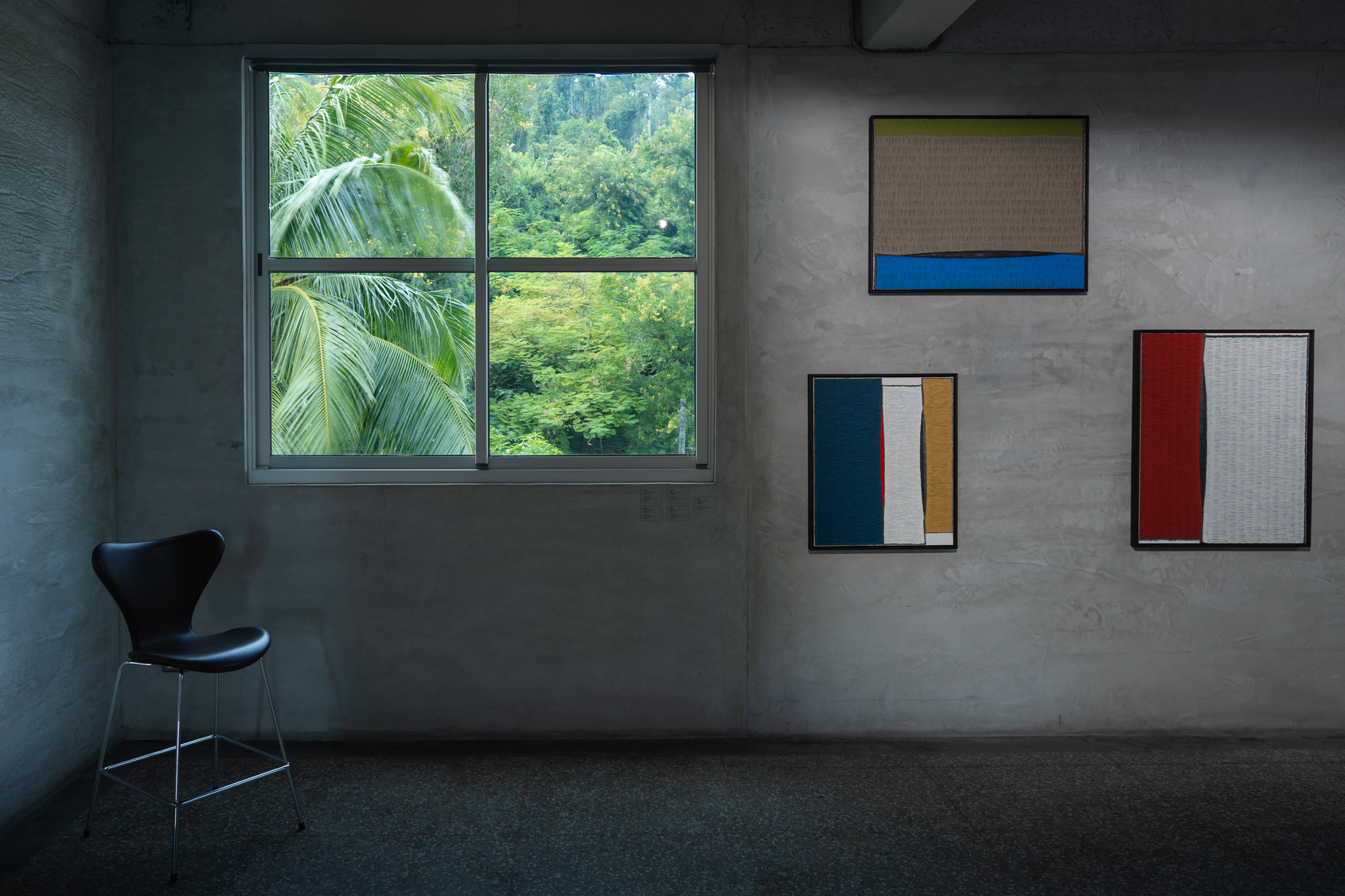
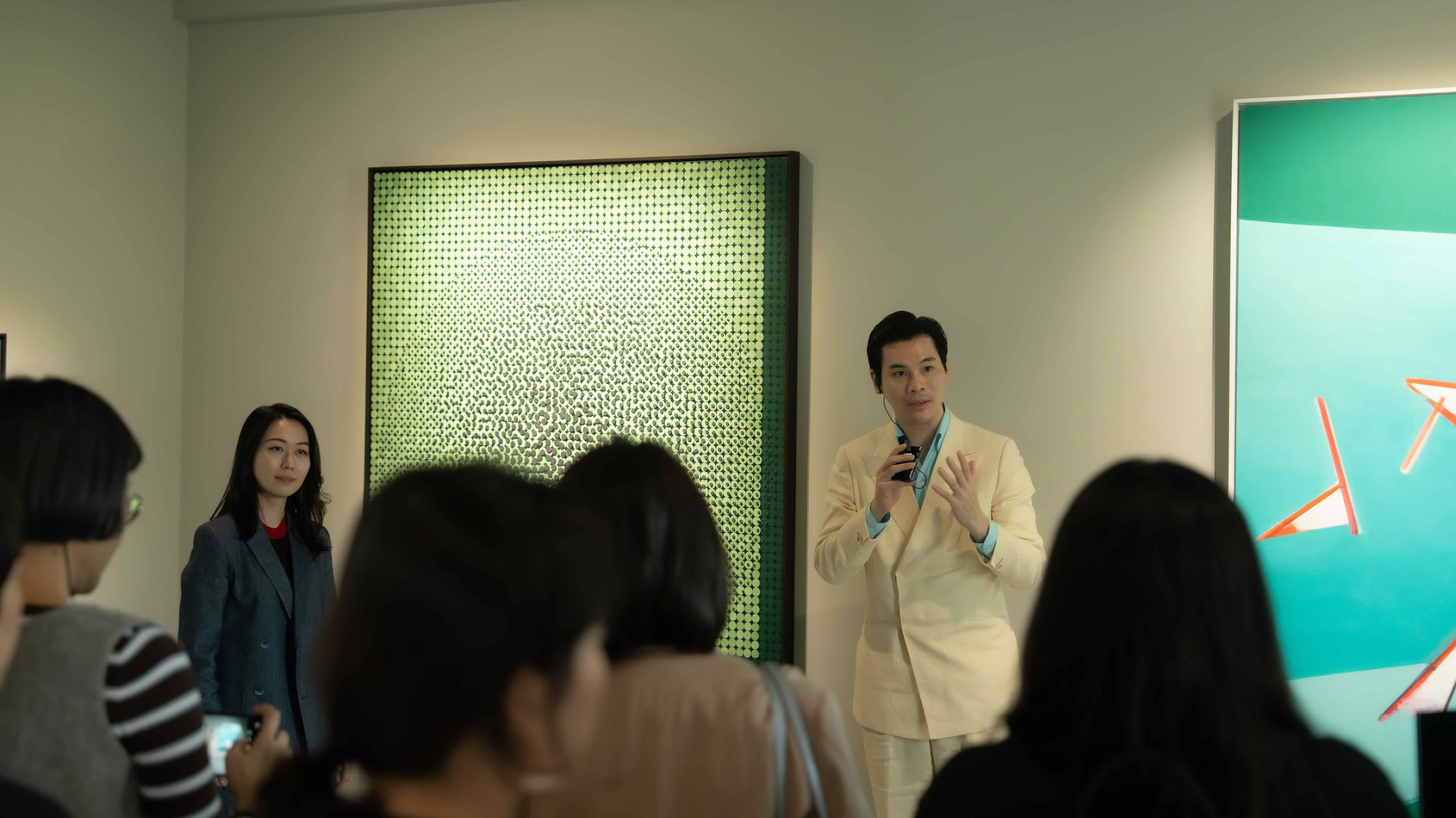
This exhibition is a meditation on time, space, and individuals. Its point of departure lies in a shared past, unfolds in a moment of convergence, and looks toward a future yet to be collectively shaped. Constructed in 1967, the ALIEN Art Centre building — formerly the Jinma Guesthouse — originally served as temporary lodging for military personnel before their deployment to Kinmen and Matsu, embodying the tense geopolitical climate of post–World War II Asia. In 1998, as the specter of war gradually receded, the site was repurposed for use by the Ministry of Transportation’s Railway Construction Bureau, and in 2016 it was transformed into a contemporary art museum. From the mid-twentieth century to the early twenty-first century, the building’s function evolved from military to industrial to artistic — transforming hostility into harmony, and conflict into reconciliation. This trajectory mirrors the broader arc of Asian history during the same period. While its exterior and interior have undergone careful renovation, the building remains largely preserved upon its original foundation, becoming a vessel that condenses nearly sixty years of time and space. The two artists presented in this exhibition, Ho Kan and Soonik Kwon, likewise embody distinct yet intersecting historical currents. Ho Kan, born in Nanjing in 1932, relocated to Taiwan in 1949 and from 1964 onward lived in Milan for half a century, establishing himself as a leading figure of Chinese geometric abstraction on the international stage. Soonik Kwon, born in Seoul in 1959, grew up in the Republic of Korea amid Cold War tensions and rapid national development, grounding his practice in both Korean tradition and modern art before forging his own mature artistic language. The Jinma Guesthouse, Ho Kan, and Soonik Kwon each carry their own independent histories, yet all have navigated the same vast current of time and space. In 2025, these trajectories converge, allowing art shaped by history, philosophy embedded in art, and philosophy sung into poetry to coalesce here and now, giving rise to this exhibition. My sincere gratitude goes to ALIEN Art Centre, Chini Gallery, and Whitestone Gallery for their generous support; to Masters Ho Kan and Soonik Kwon and their families for their warm hospitality; and to all who made possible the vivid realization of this exhibition. As a co-curator, I see this project as at once a focused presentation highlighting each artist’s achievements, a first encounter and dialogue between two internationally acclaimed abstract artists from China and Korea, and a narrative that speaks to our shared past and future — from Asia to the wider world. I hope visitors will enjoy this journey and fully immerse themselves in the experience we have devotedly created.
Ho Kan: The Colorful Air-Raid Shelter of Memory
Ho Kan was born in Nanjing in 1932. His early exposure to Chinese culture and art came under the guidance of his grandfather, the calligrapher Huo Rui. This familial foundation never left him, even after he later relocated to Milan. Instead, it persisted through his continued study of traditional calligraphy and through the integration of Chinese character structures into his abstract paintings. In 1949, Ho Kan moved to Taiwan with the families of National Revolutionary Army veterans. In 1951, he entered the studio of Li Chun-shan, a pioneer of modern Chinese art, formally embarking on the path of modernism. He soon formed close ties with like-minded peers, including Lee Yuan-chia, Wu Hao, Ouyang Wen-yuan, Hsia Yan, Hsiao Chin, Chen Tao-ming, and Hsiao Ming-hsien — members of the influential Ton Fan Group founded in 1956, often referred to as the “Eight Bandits” of the Chinese avant-garde. Around 1952, Wu Hao—then a second lieutenant stationed at Air Force Headquarters — was assigned to manage an unused air-raid shelter on Longjiang Street in Taipei. On weekends, artists gathered there to paint and exchange ideas, and the site gradually became a cultural hub frequented by intellectuals, diplomats, and foreign guests. This vibrant scene came to an abrupt end in 1959, when the military reclaimed the shelter overnight and destroyed the artworks inside. Though Ho Kan would not depart for Milan until 1964, the “colorful air-raid shelter” on Longjiang Street symbolized his generation’s pursuit of modernism and artistic freedom. Under Li Chun-shan’s guidance, Ho Kan explored surrealist imagery inspired by dreams and imagination, opening a door that would continue to inform his artistic practice in the decades to come.
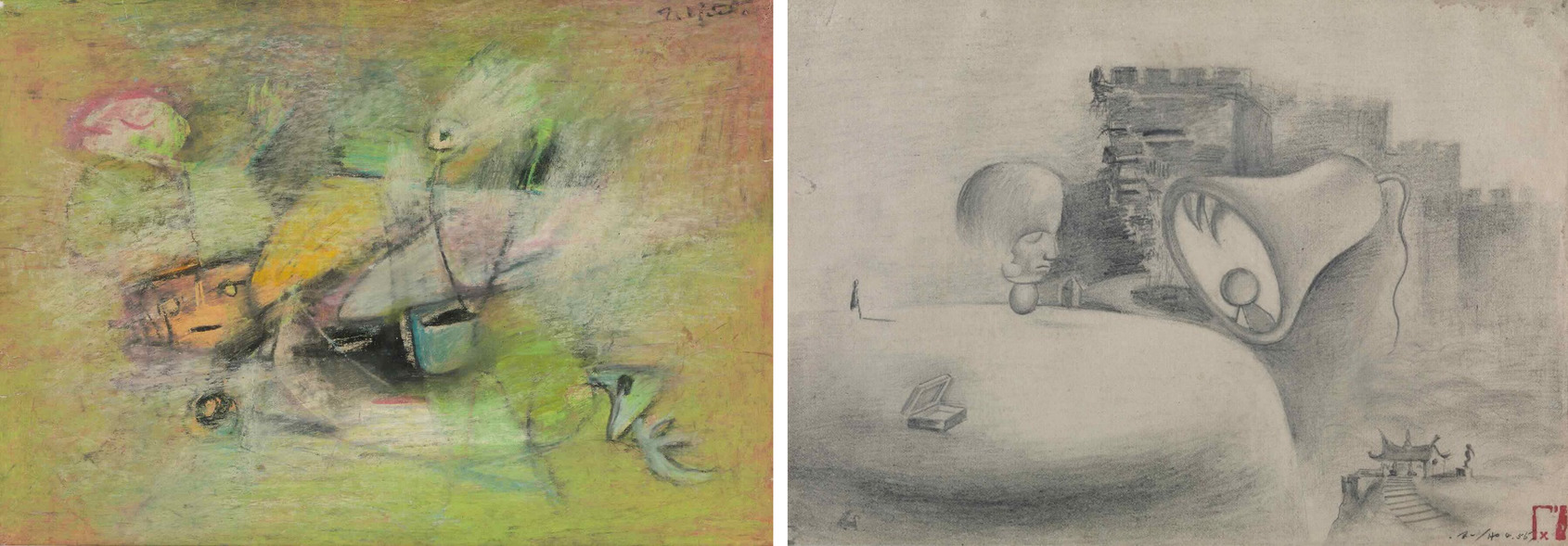 Left: Ho Kan|Dream|1955|Pastel on paper|25 x 35 cm|© Ho Kan
Right: Ho Kan|Untitled|1955|Pencil on paper|26 x 37 cm|© Ho KanAn Abstract Surrealist Playground In 1964, Ho Kan left Taiwan, traveling by sea via Hong Kong and Singapore before arriving in Europe. Originally intending to settle in France, visa circumstances led him instead to Milan, where he would reside for the next fifty years before returning to Taipei in 2014. This prolonged sojourn decisively shaped both his artistic language and his historical standing. As an overseas Chinese artist in Italy, Ho Kan actively participated in the postwar Italian art movements of the 1960s, forging connections with influential figures such as Lucio Fontana, Antonio Calderara, and Wifredo Lam. His work was also deeply informed by geometric abstraction, particularly the theories and structures of Wassily Kandinsky, Kazimir Malevich, Piet Mondrian, and Josef Albers — an influence that helped crystallize his distinctive abstract vocabulary. Despite the strong geometric character of his Milan-period works, Ho Kan’s paintings also conceal the structural sensibilities of Chinese characters and calligraphic brushwork inherited from his early training, alongside the surrealist imagination cultivated since the 1950s. This unique synthesis — what may be described as “Abstract Surrealism” — transcends both orthodox geometric abstraction and figurative surrealism, offering a groundbreaking reinterpretation of Chinese script and calligraphy within contemporary abstraction and defining Ho Kan’s singular artistic identity.
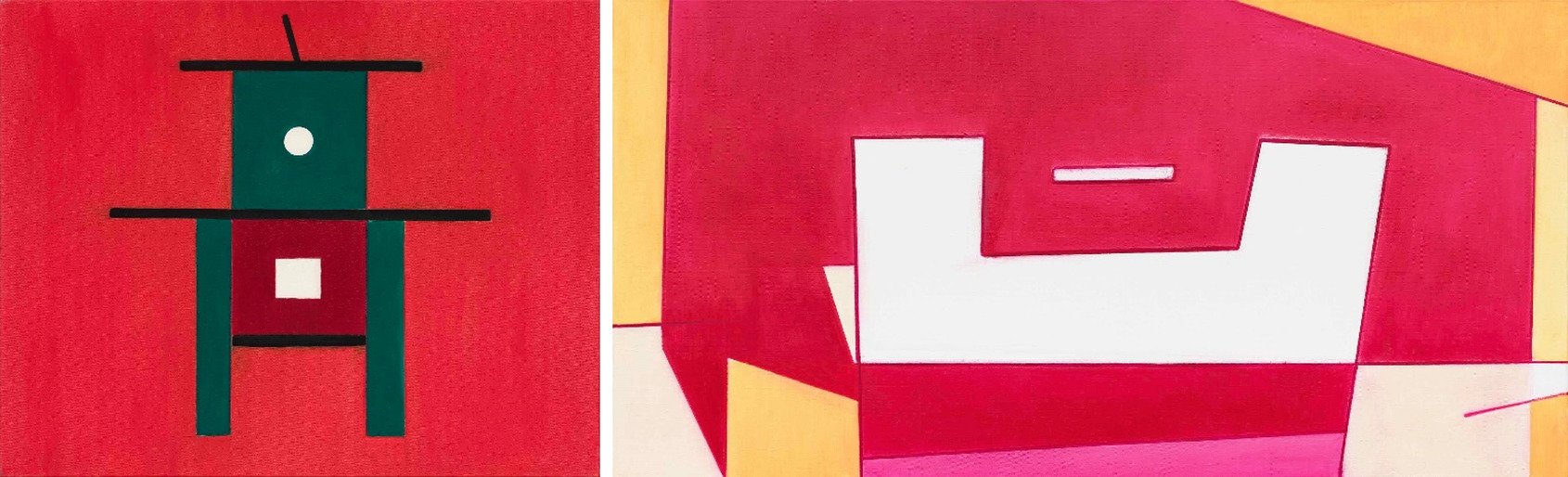 Left: Ho Kan|Abstract 2018-035|2018|Oil on canvas|72.5 x 91 cm|© Ho Kan
Right: Ho Kan|Abstract 2024-008|2018|Oil on canvas|100 x 200 cm|© Ho KanThe Movement of Space, the Flow of TimeDuring the 2023 ART Taipei, Ho Kan summarized his artistic philosophy with phrases such as “something from nothing, boundless imagination, inexplicable yet wondrous,” and “simplicity is never simple.” These reflections were reaffirmed in his 2024 solo exhibition at the Jinling Art Museum in Nanjing.“Something from nothing” corresponds to his abstract approach; “boundless imagination” evokes his surrealist thinking; and “simplicity is never simple” reflects the depth embedded within his refined compositions. His abstract works use line as structure and color as substance, often employing gradated hues with a sensitivity to light rather than flat application. Geometric elements are rarely rigid; instead, diagonal lines, asymmetrical forms, and even Chinese character structures generate dynamic spatial movement. When static space begins to move, time emerges — forming the distinctive Ho Kan abstract continuum in which viewers are invited to wander.
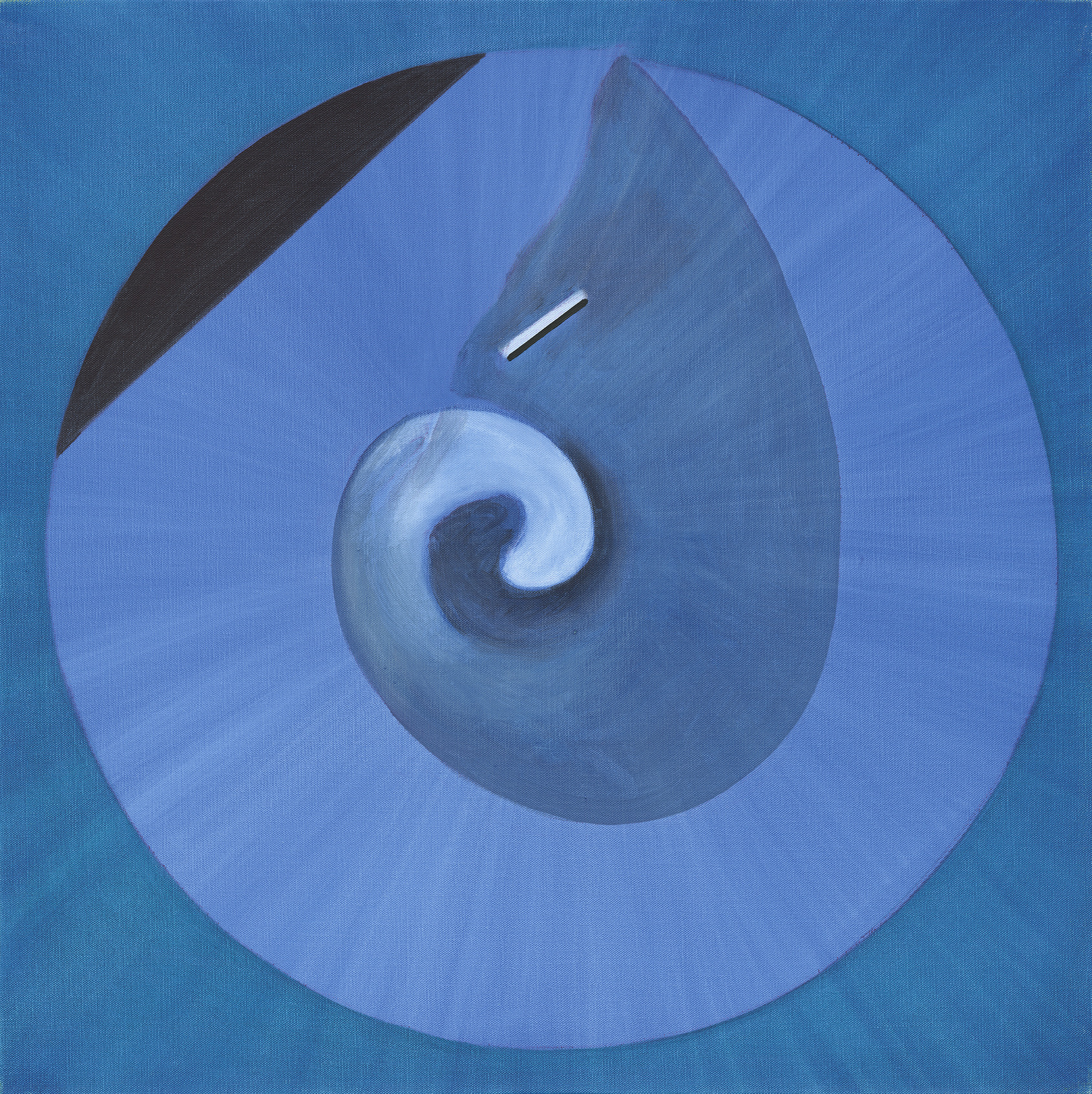 Ho Kan|Abstract 2024-013|2024|Oil on canvas|100 x 100 cm|© Ho KanThree Phases of Development: Roughly Twenty Years Each
 From Ho Kan’s arrival in Milan in 1964 to the present spans more than sixty years. His career may be understood through three approximate twenty-year phases:
First Phase (1964 – 1984):
Ho Kan’s initial two decades in Milan, marked by deep engagement with the Italian art scene and frequent exhibitions across Italy and Europe, including the United Kingdom, the Netherlands, West Germany, and Switzerland.
Second Phase (1985 – 2005):
As cross-strait relations gradually eased in the 1980s, Ho Kan began reconnecting with East Asia. In 1985, his first Taiwan solo exhibition after two decades abroad was held at the Huan Ya Art Center in Taipei, inaugurating a period in which major exhibitions alternated between Taiwan and Italy.
Third Phase (2006 – present):
Ho Kan returned to Mainland China in 1979 after many years of absence. In 1983, he was invited to deliver lectures at the Central Academy of Fine Arts in Beijing, the China Academy of Art in Zhejiang, the Nanjing University of the Arts, and the Department of Fine Arts at Hunan University. In 2006, the artist’s residency for several months in Beijing’s 798 Art District embodied the deepening of his "return to the East" alongside the maturation of the Chinese art ecosystem. In 2014, Ho Kan married Ms. Wan Yi-yeh, marking the end of his fifty-year sojourn in Milan. He returned to settle in Taipei, officially shifting the center of his life and work back to the East.
Based on these three developmental stages, it is evident that Ho Kan’s works from the first and second phases were primarily created in Milan. Due to the spatial constraints of his studio and the influence of Italian collecting trends, his works from this period—with a few exceptions—generally did not exceed 100 x 80 cm (40F canvas). Entering the third phase, the artist gained greater creative space and support during his relocation to the East. Consequently, the scale of his works expanded, with major galleries, art fairs, and museum exhibitions providing broad platforms. This gave rise to monumental and multi-panel compositions, where the artist’s creativity in composition, color, and line entered a more profound and expansive stage.
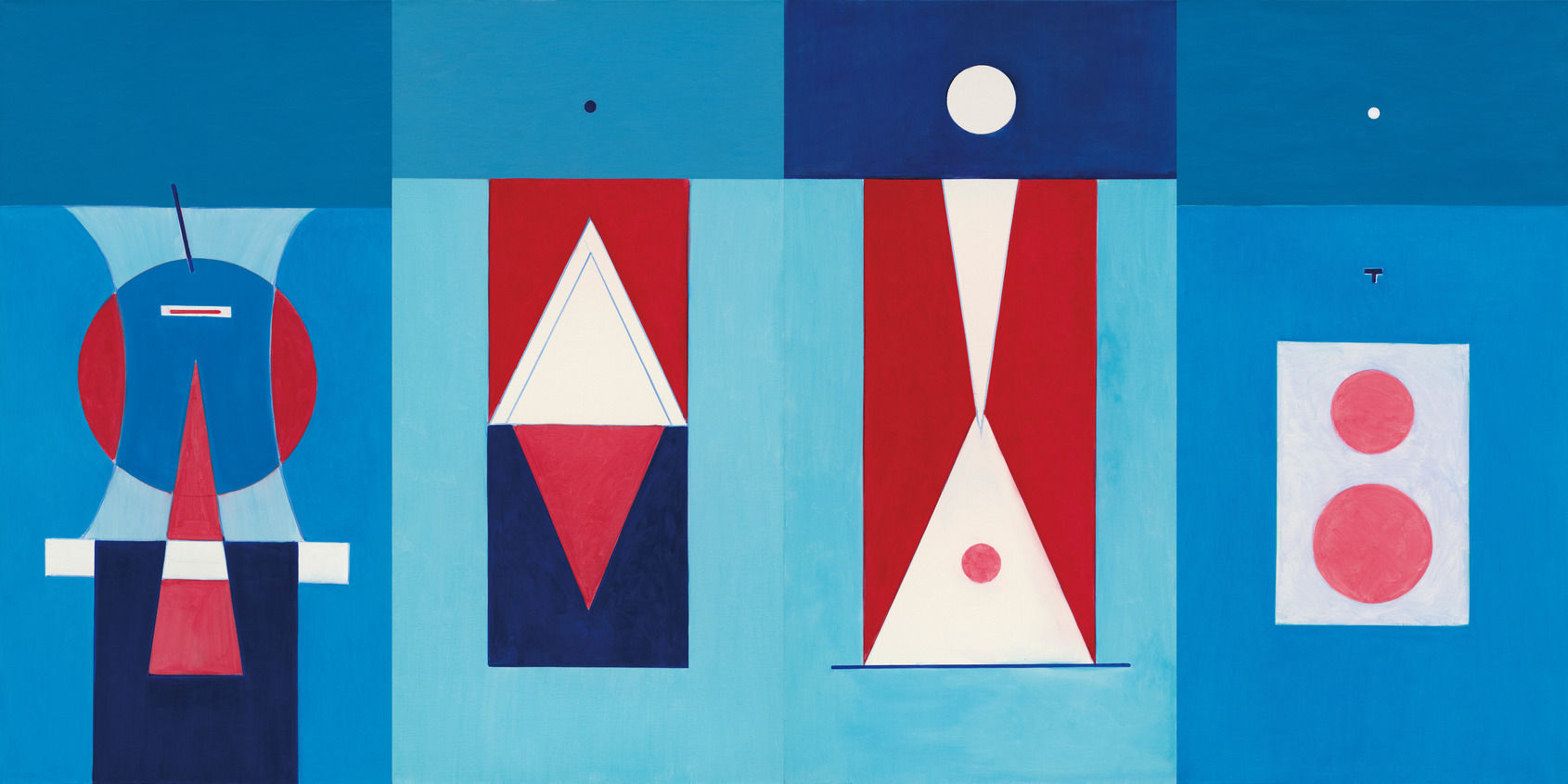 Ho Kan|Abstract 2019-015|2019|Oil on canvas|200 x 100 cm|© Ho KanMarket Development and Collecting Perspectives
From 2012 to 2024, during my tenure as a Modern Art specialist and executive at Sotheby’s Hong Kong, I witnessed the significant rise of Ho Kan’s market presence. Sotheby’s first offered his work at auction in 2014, and from 2017 onward, as the concept of “Postwar Asian Art” gained traction, I actively promoted scholarly research and acquisitions, including multiple research trips to Milan. Important works from notable collections — such as those of Taiwanese poet Luo Men and Italian photographers Nino Lo Duca and Orazio Bacci — were introduced to the Hong Kong auction platform.By the end of 2025, Sotheby’s had established all of Ho Kan’s top fifteen auction records. Over the past decade, his market has shown consistent growth, supported by collectors across Taiwan, Hong Kong, Shanghai, Southeast Asia, and mainland China, with sustained interest in both early works and recent large-scale masterpieces.
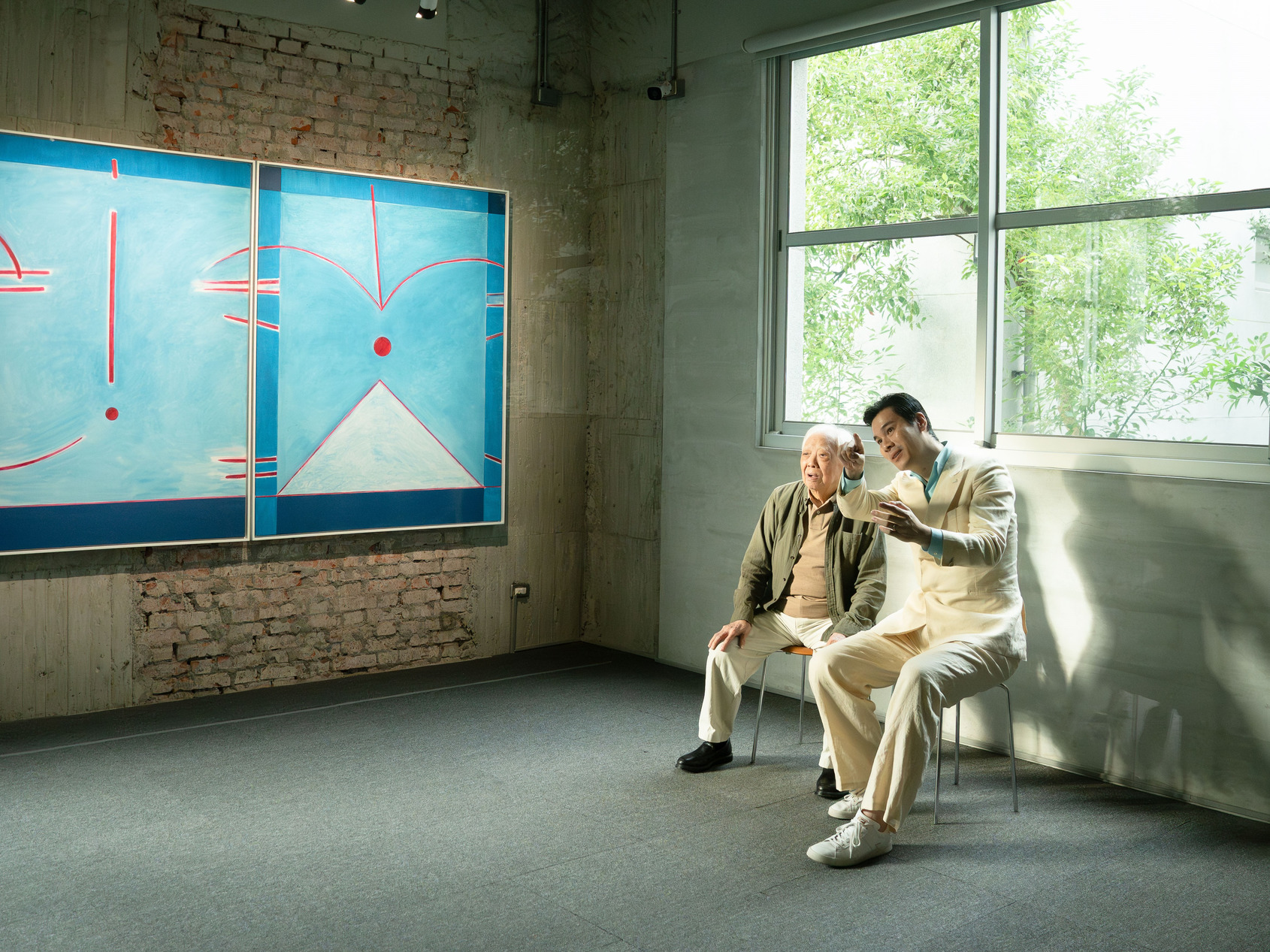 The Bards of Time and Space|Installation View|Left: Ho Kan ; Right: Felix Kwok|ALIEN Art Centre, 2F|© ALIEN Art CentreSoonik Kwon: Walking Out of the Corridor, Through the Fissures of Time
 My encounter with Soonik Kwon began at ART Taipei 2024. At the Whitestone Gallery booth, I came upon his work Interstice – Pile up & Rub and was instantly struck. Before I even had time to look up the artist’s name, I found myself deeply drawn in: the composition was restrained and refined; the colors luminous yet understated. Along the edges of each color block, layers of underlying hues subtly revealed themselves. The pigment possessed a mineral-like texture, softly glowing from within. From a distance, the work appeared as flat planes of color; up close, the surface revealed chisel-like strokes, as if carved.
Most striking of all was the fact that the color blocks did not fit together seamlessly. Instead, narrow fissures emerged between them, as if formed by friction — like newly opened dimensions created after tectonic shifts in the earth’s crust. The artist filled these interstices with graphite, polishing them into smooth, recessed grooves that emitted a warm, gentle sheen as light moved across the surface. Standing before these works, I felt both a profound sense of calm and an unexpected excitement. As someone who has worked in modern and contemporary art for over a decade, it had been a long time since I had felt my heart stirred so immediately by the discovery of a new artist.
I asked a staff member whose work this was.
“This is by the Korean artist Soonik Kwon,” she replied.
“What does he paint?” I asked.
“He paints time.”
That answer captivated me completely. Time — the great question of the universe. The rise of civilizations, the competition of the world, so much is born of time. What is time? What is its essence? Does it even exist? These are questions humanity continues to grapple with. Artists have long sought to render time visible, to search for it within their work. While the answers they arrive at are important, the ways in which they pursue and articulate those answers may be just as significant on an artistic level.
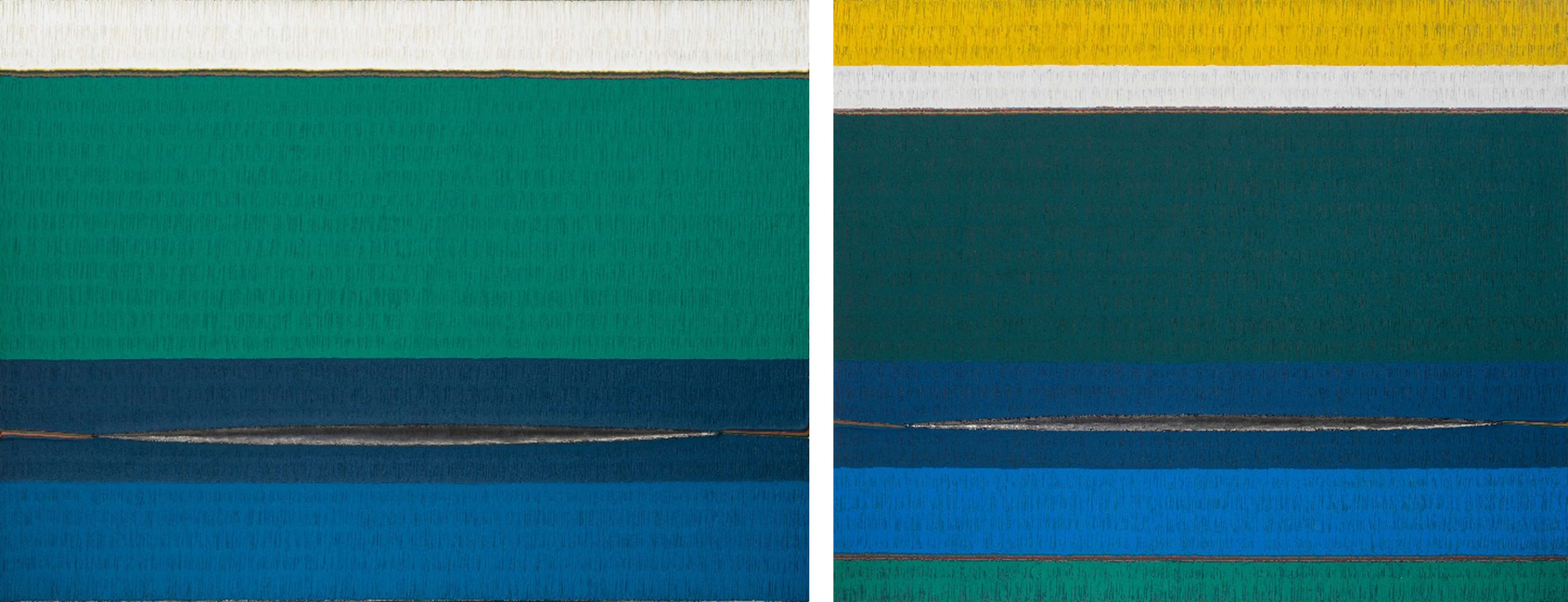 Left: Soonik Kwon|Interstice-Pile up & Rub (3-01)|2024|Mixed media|97 x 130.3 cm|© Soonik Kwon
Right: Soonik Kwon|Interstice-Pile up & Rub (3-11)|2024|Mixed media|130.3 x 107 cm|© Soonik Kwon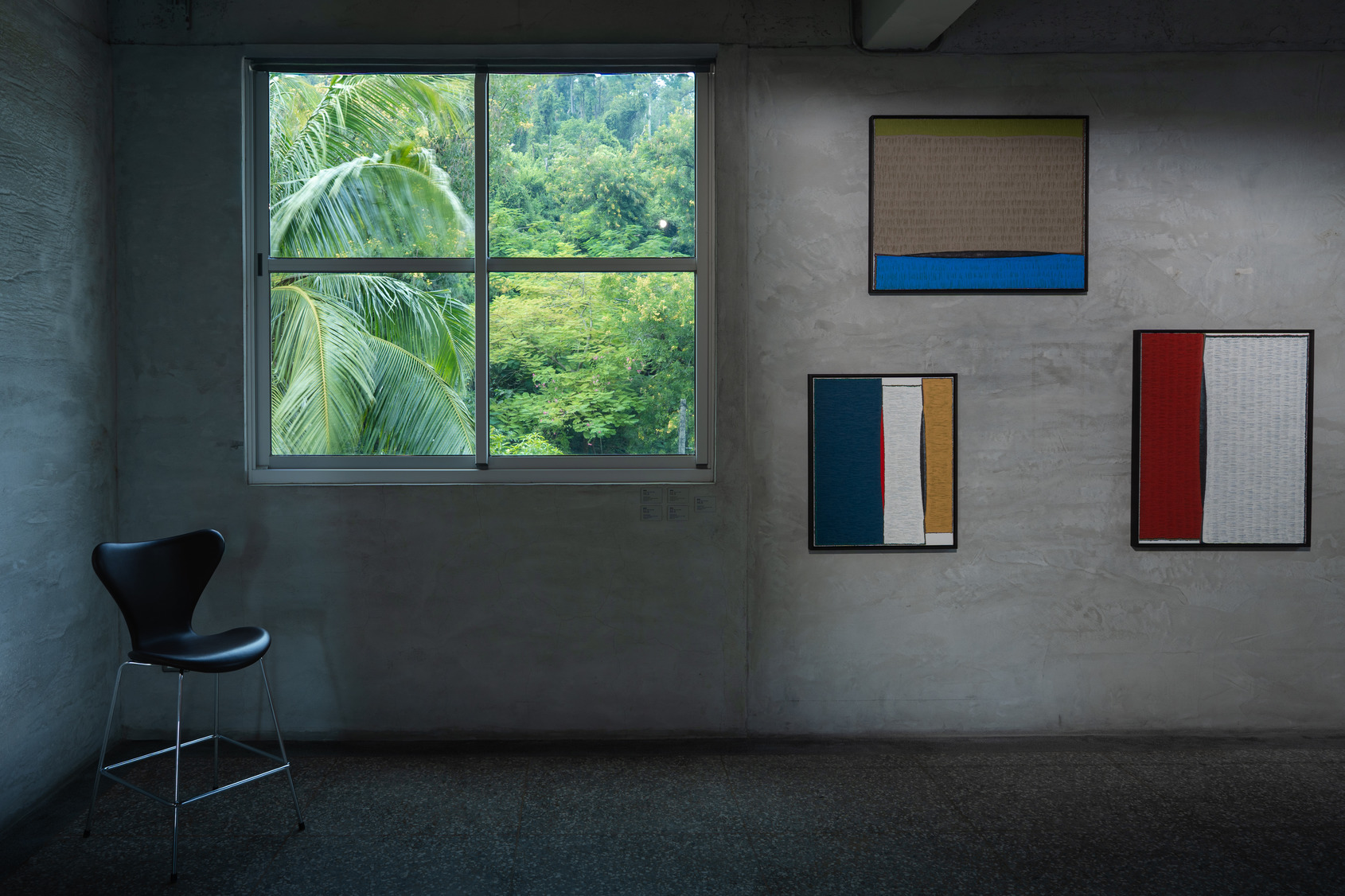 The Bards of Time and Space|Installation View|ALIEN Art Centre, 3F|© ALIEN Art Centre
Driven by curiosity, I began an intensive exploration of Kwon’s work, researching his background and artistic trajectory. Kwon emerged at a young age, initially working primarily with ceramics and oil painting. His early works embodied both traditional Korean aesthetics and modernist sensibilities. It was not until 2008, during a residency program in Alacant, Spain, that he formally began using graphite as a medium. However, his visual language did not fully transition into abstraction until after 2012.
This long process of transformation reflects an artist’s resolute decision to relinquish the foundations he had built since his youth — to abandon what was already mastered in order to pursue something more distant, more profound. I later learned that Kwon is a devout Buddhist who practices daily, adhering to principles of compassion and non-harm. This life philosophy is deeply embedded in his artistic practice. The meticulous grinding and refining of details in his works mirrors the rhythm of chanting and prostration. One might even say that the creation of his works transcends what we conventionally call “art-making”; it is an embodiment of spiritual cultivation — a disciplined practice of understanding and inhabiting the “present moment.”
In preparation for this exhibition, I visited Soonik Kwon during Seoul Art Week in September 2025, conducting an in-depth interview and filming a documentary. Through this encounter, I came to understand that what Kwon expresses is not merely time, but more precisely, the present moment. In Interstice–Pile up & Rub, the colliding color blocks symbolize the “past” and the “future,” while the fissures between them represent the awakened awareness of the “now.” As the artist himself explains:
“The ‘interstice’ is an entrance to eternity. It exists between the past and the future. Through my work, I wish to let go of attachment to the past and anxiety about the future, and to rediscover the value of the present. I devote myself fully, hoping that my work may bring comfort and strength to those who encounter it.”Kwon’s focus on the present moment is reflected not only in the finished works, but also in his choice of materials and creative process. Though born in Seoul, his hometown is Mungyeong, a region historically known for its coal mines. After entering the Department of Fine Arts at Sejong University, Kwon re-encountered the materials of his homeland through the lens of an artist — most notably natural graphite. Formed over hundreds of millions of years under extreme heat and pressure, graphite is deep black in color yet shimmers brilliantly when it catches the light. Its very existence is a condensation of time itself. No material could feel more familiar to Kwon, nor more suitable for expressing the “now.”
At his studio in Yangju, north of Seoul, the artist personally demonstrated his process: from grinding and polishing the graphite adhered to the canvas, to mixing oil paints with light molding paste containing marble dust to create a quick-setting impasto. He then applies the pigment with a fine brush before lightly scraping it with a palette knife, building up layers of earthy, luminous, and textured blocks of color.
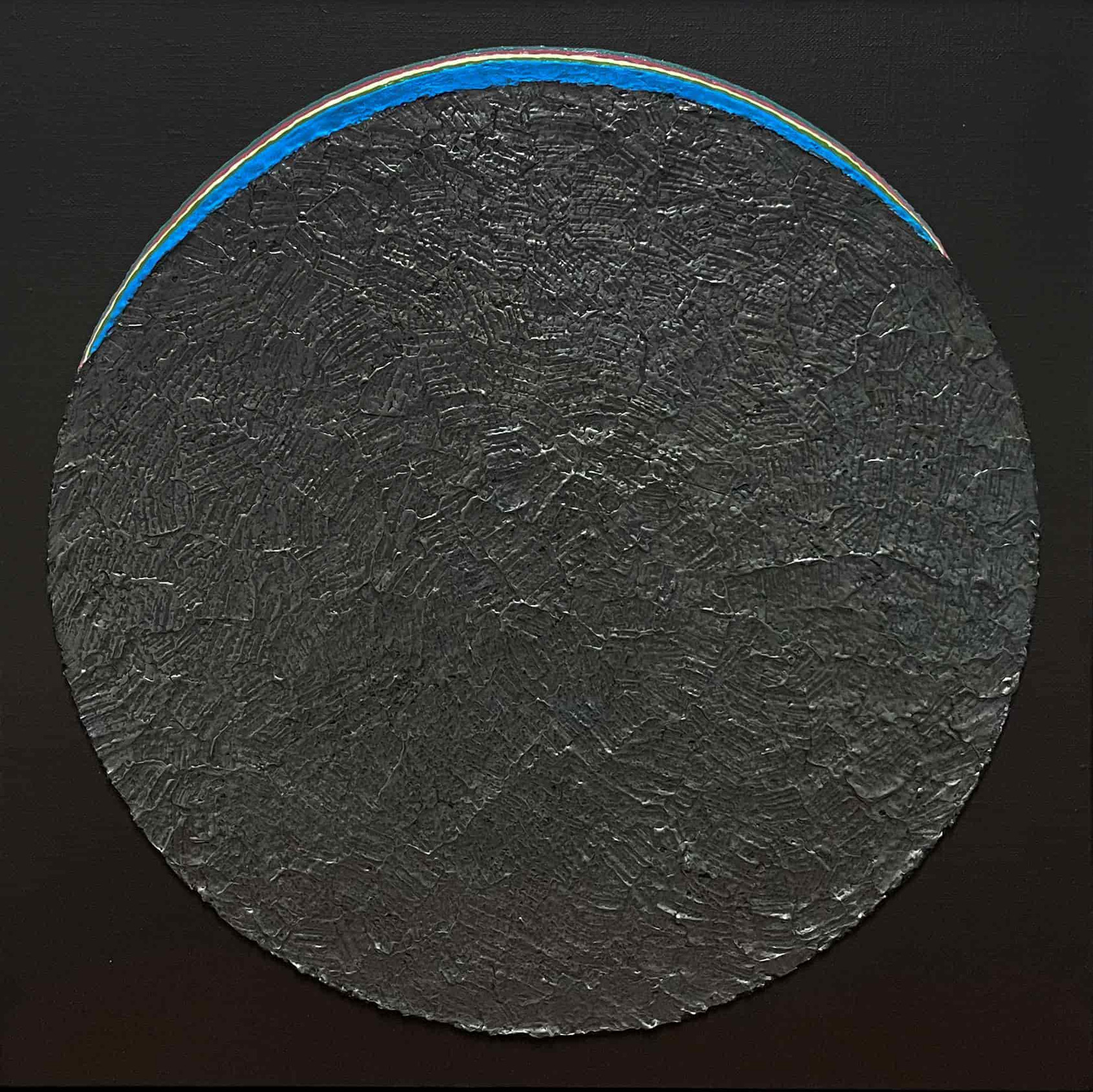 Soonik Kwon|Feeling (9-02)|2023|Mixed media|50 x 50 cm|© Soonik Kwon
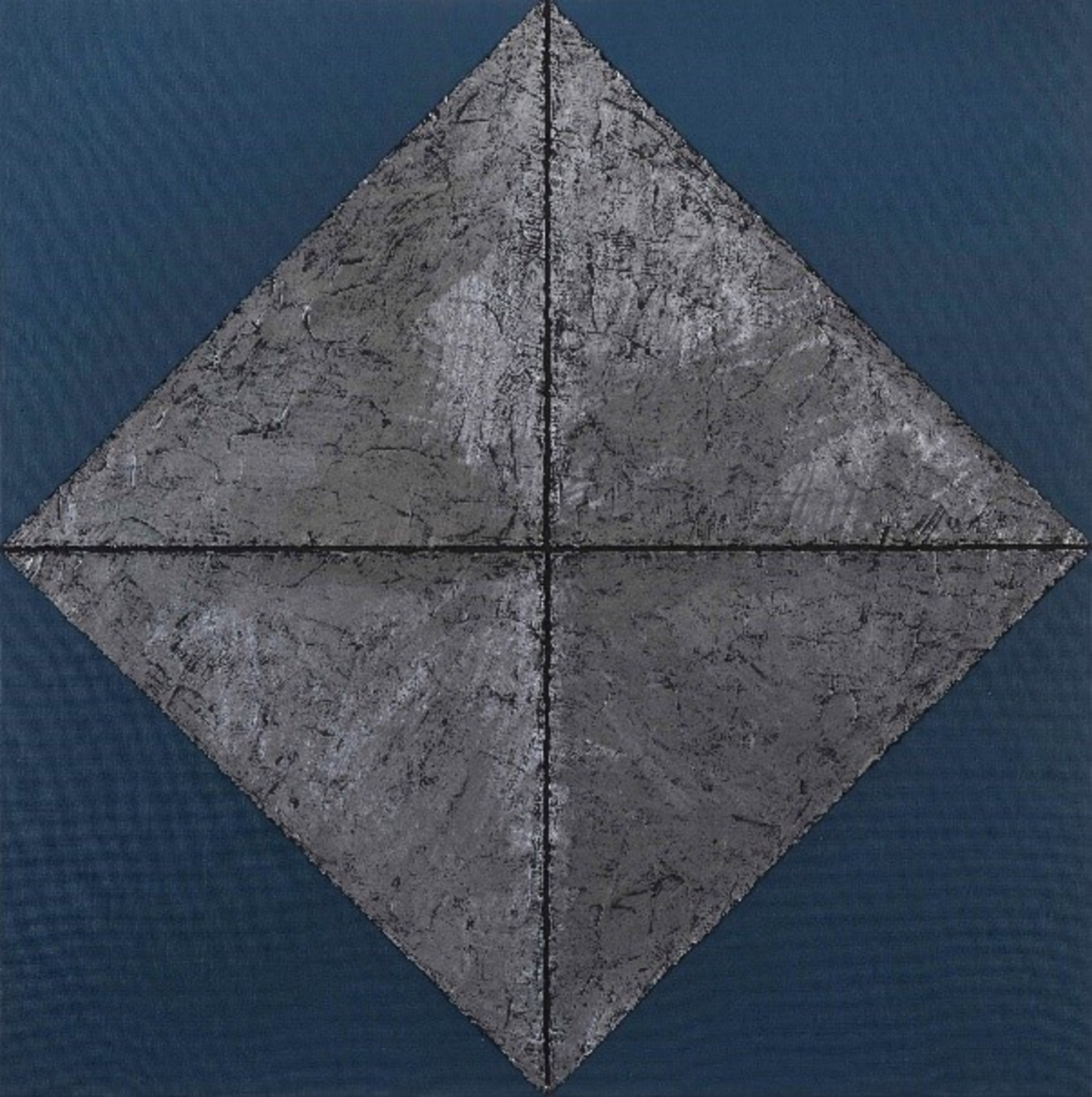 Soonik Kwon|Feeling-Originally (17-1)|2017|Mixed media|61 x 61 cm|© Soonik KwonFrom Dansaekhwa to Spatialism
Experiencing Soonik Kwon’s work is a richly layered process. Through his art, one senses not only an independent thinker, but also a deeply learned individual — someone who has “seen countless swords before recognizing the true blade.” The Interstice – Pile up & Rub series first drew me in. Knowing that Kwon is a Korean artist naturally led me to consider the legacy of postwar Korean Dansaekhwa, with its Zen-inflected, meditative minimalism. At the same time, the way these compositions pierce the two-dimensional plane recalls the work of Italian Spatialist master Lucio Fontana, particularly his iconic Concetto Spaziale, Attese. Yet while Fontana’s Spatialism cuts through space to enter time, Kwon enters space through time. Within the fissures between past and future, he seeks the present — focusing on the power of now and endowing life with meaning. It is precisely this quality that allows Kwon’s works, despite their calmness, to radiate warmth and quiet strength.
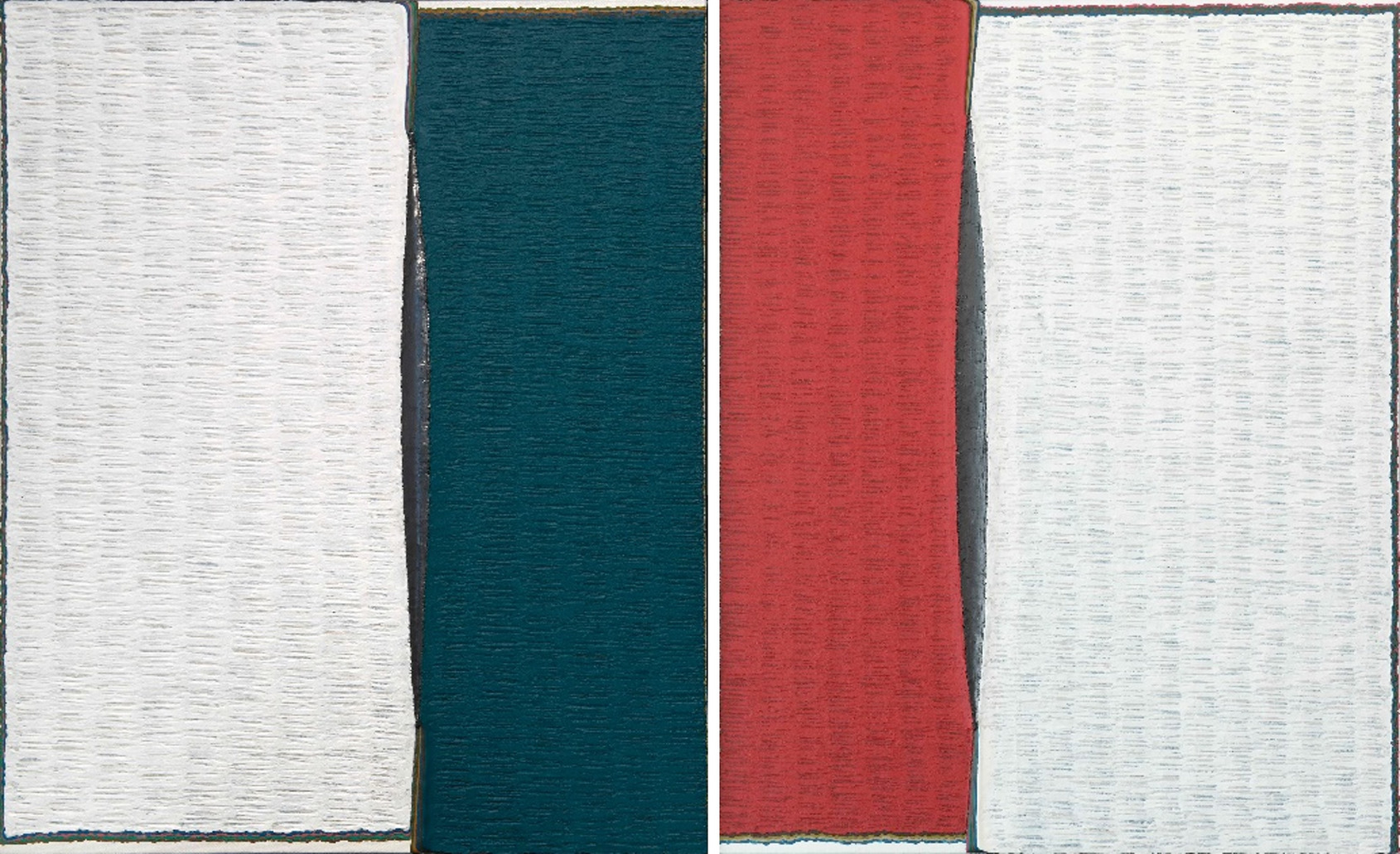 Left: Soonik Kwon|Interstice-Pile up & Rub (1-07)|2024|Mixed media|72.7 x 60.7 cm|© Soonik Kwon
Right: Soonik Kwon|Interstice-Pile up & Rub (11-01)|2025|Mixed media|90.5 x 72.7 cm|© Soonik KwonFrom Lyrical Abstraction to Su DongpoVisually, Kwon’s work may first evoke Korean Dansaekhwa and Italian Spatialism. However, a deeper examination of his themes and methods invites comparison with masters of French Lyrical Abstraction such as Zao Wou-Ki and Georges Mathieu. Zao’s Oracle Bone Period (1954–1959) traced the origins of civilization through Shang and Zhou dynasty inscriptions, reaching back to the temporal source of culture itself. Kwon’s Interstice – Pile up & Rub resonates with this phase of Zao’s work. Georges Mathieu, though French, began studying Eastern Zen philosophy and Zen painting deeply in the 1950s, establishing the theoretical foundation of Lyrical Abstraction. Mathieu emphasized speed, using rapid bodily movement to outpace conscious thought. Kwon’s method is the opposite — slow, meticulous, and restrained. This contrast reflects not only different interpretations of speed and time, but also fundamentally different understandings of the relationship between body and mind. Mathieu may be described as “the body commanding the mind,” while Kwon practices “the body cultivating the mind,” using quiet, repetitive gestures as a form of inner discipline — an alternative articulation of Abstract Expressionism. As a Chinese viewer, observing Kwon’s process of grinding graphite inevitably reminded me of Su Dongpo’s line from Reply to Professor Shu on Viewing My Ink Collection:“It is not man who grinds the ink; it is the ink that grinds the man.” This ancient saying encapsulates a profound reversal of subject and object. One grinds ink to create art, yet in doing so, one’s own temperament and will are refined. Who, then, is subject or object? Which is primary, which secondary? The question lingers, rich with resonance.
Mind Mirror: Installation Works that Merge Space and SelfKwon’s use of graphite took on a new dimension in 2018. Breaking away from easel painting, he began applying graphite onto roof tiles, creating units that exist between two and three dimensions. He calls this series “Mind Mirror.” Roof tiles are commonplace in Korea, and Kwon notes that their concave and convex sides symbolize yin and yang. In Korean Buddhist tradition, names of loved ones are often written on tiles to be used in temple renovations, as a form of blessing. By combining tiles with graphite, Kwon developed a deeply personal and sincere visual language — one that subtly recalls his early ceramic practice and its spiritual maturation. As installation art, Mind Mirror is endlessly variable. In exhibitions around the world, the tiles may hang flat against a wall, form angular configurations, suspend from ceilings, rise like bamboo, stack into columns, or invert into channels. These installations embody a quiet mastery — expanding the spiritual essence of Kwon’s paintings into three-dimensional space, adapting to each site, and inviting viewers to contemplate the self through objects, to listen inwardly, and to immerse themselves in the artist’s deep and sustained meditative world.
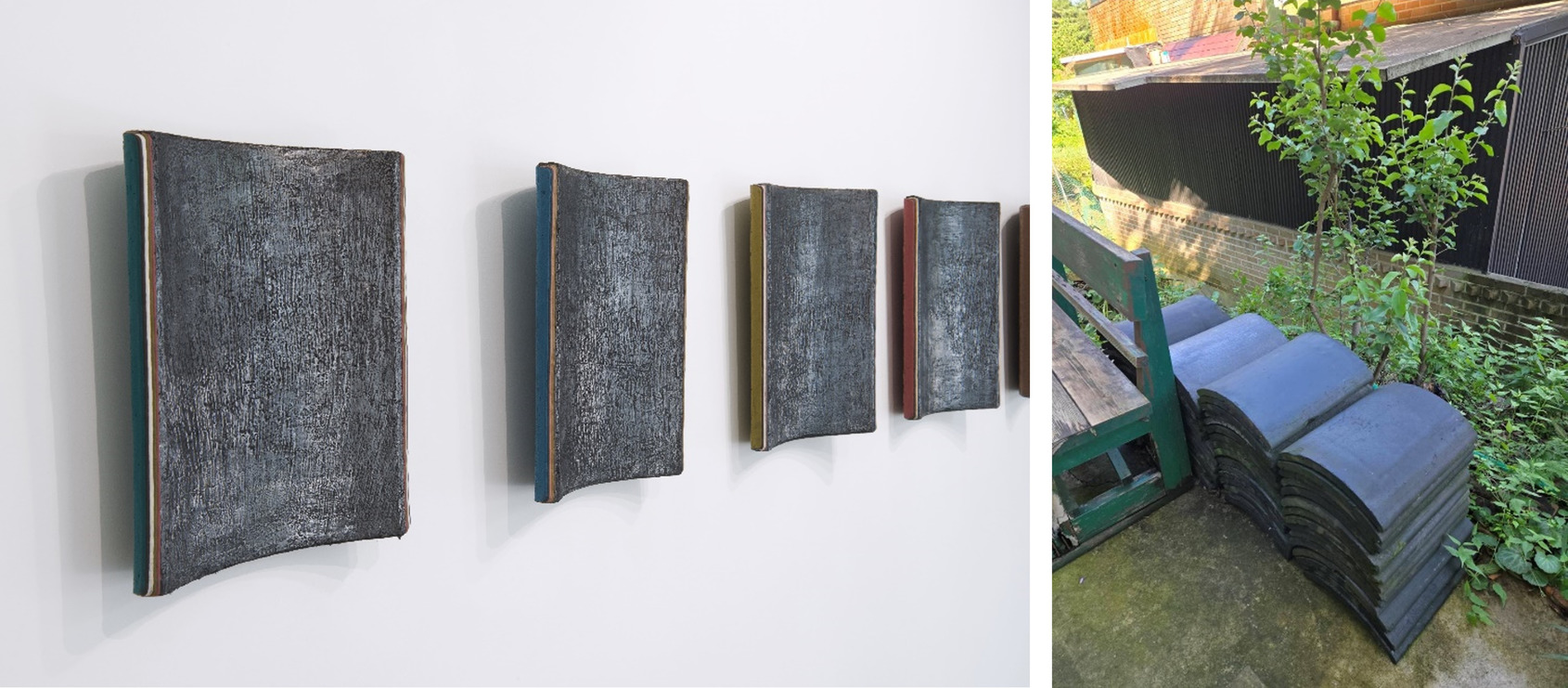 Left: Soonik Kwon|Self-Portrait|2025|35 x 30 cm|ALIEN Art Centre, 2F|© ALIEN Art Centre
Right: Soonik Kwon|Making-of Documentation|© Soonik Kwon“Punto” and “Absence of Ego”: The Dotted Symphony of Ho Kan and Soonik KwonThe “dot” is a shared visual language between Ho Kan and Soonik Kwon. Both artists imbue this most fundamental element with rich meaning, forging it into a core component of their artistic vocabularies. After arriving in Milan in 1964, Ho Kan participated in the Movimento Punto, an avant-garde movement that adopted the dot as its emblem. From 1962 to 1966, thirteen exhibitions were held across Europe and Taiwan, involving over forty artists from Asia, Europe, and the Americas. As stated in the catalogue of the 1963 Taipei exhibition, Punto’s philosophy largely stemmed from “the Chinese spirit of quiet contemplation,” recalling the creative ethos of Tang and Song dynasty artists as well as Zen philosophy. In Italy — a land of classical philosophy and avant-garde thought—the dot also evokes Archimedes’ famous declaration: “Give me a fulcrum, and I shall move the world.” Ho Kan’s use of the dot is endlessly variable. To specialists, he may reference the Eight Principles of Yong and the integration of calligraphy into minimalist abstraction; to general audiences, he humorously likens his dots and slashes to Taiwanese bubble tea — “the slash is the straw, the dot is the pearl” — making abstraction accessible and engaging. In Ho Kan’s work, the dot activates space, animates composition, and speaks of cosmic movement and the vitality of all things. Since the 1960s, it has remained his central motif.
For Soonik Kwon, the dot marks his decisive move into full abstraction and symbolizes the union of art-making and spiritual practice. His Absence of Ego series, initiated in 2012, emerged after several years of working with graphite and reflects a turn toward the Buddhist concept of Anatta (no-self). In these works, Kwon abandons representational imagery, grinding graphite into circular forms repeatedly embedded into the surface, creating a relief-like texture. This distinctive approach transforms his early experience in celadon ceramics into a meditative, abstract practice — one that cultivates focus, presence, and the dissolution of ego. The Absence of Ego works often feature strong geometric structures. Graphite dots are arranged into circles, squares, triangles, and crosses. According to the artist, the circle symbolizes heaven, the square earth, the triangle humanity, and the cross direction. These large-scale works evoke Op Art masters such as Jesús Rafael Soto and Carlos Cruz-Diez, as well as the spiritual sensibilities of Japanese Zen gardens and postwar Japanese and Korean Mono-Ha. Like a resonant chant, they convey the artist’s calm and purified inner state.
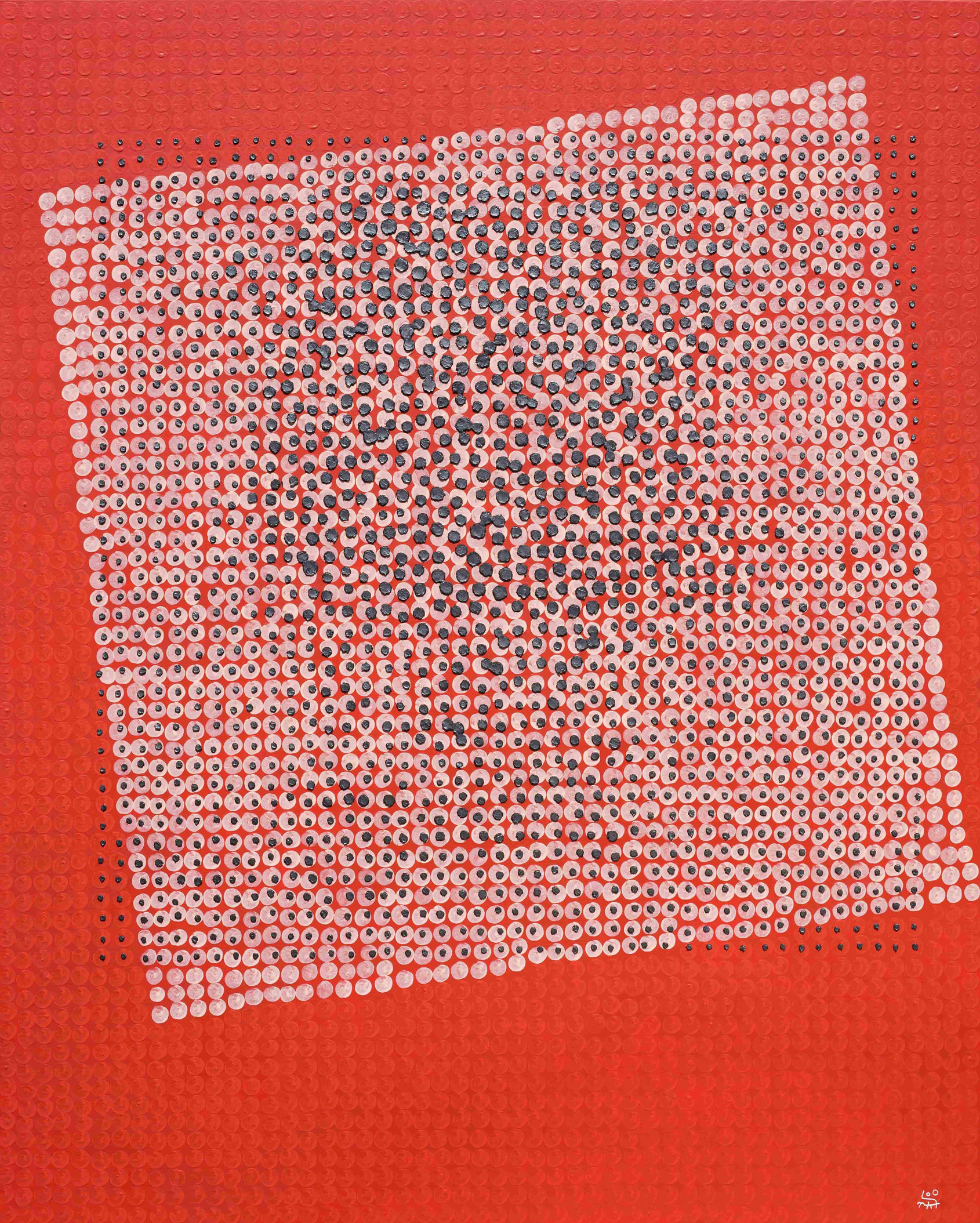 Soonik Kwon|Absence of Ego-Mirage (13-03)|2013|Mixed media|162.2 x 130.3 cm|© Soonik Kwon
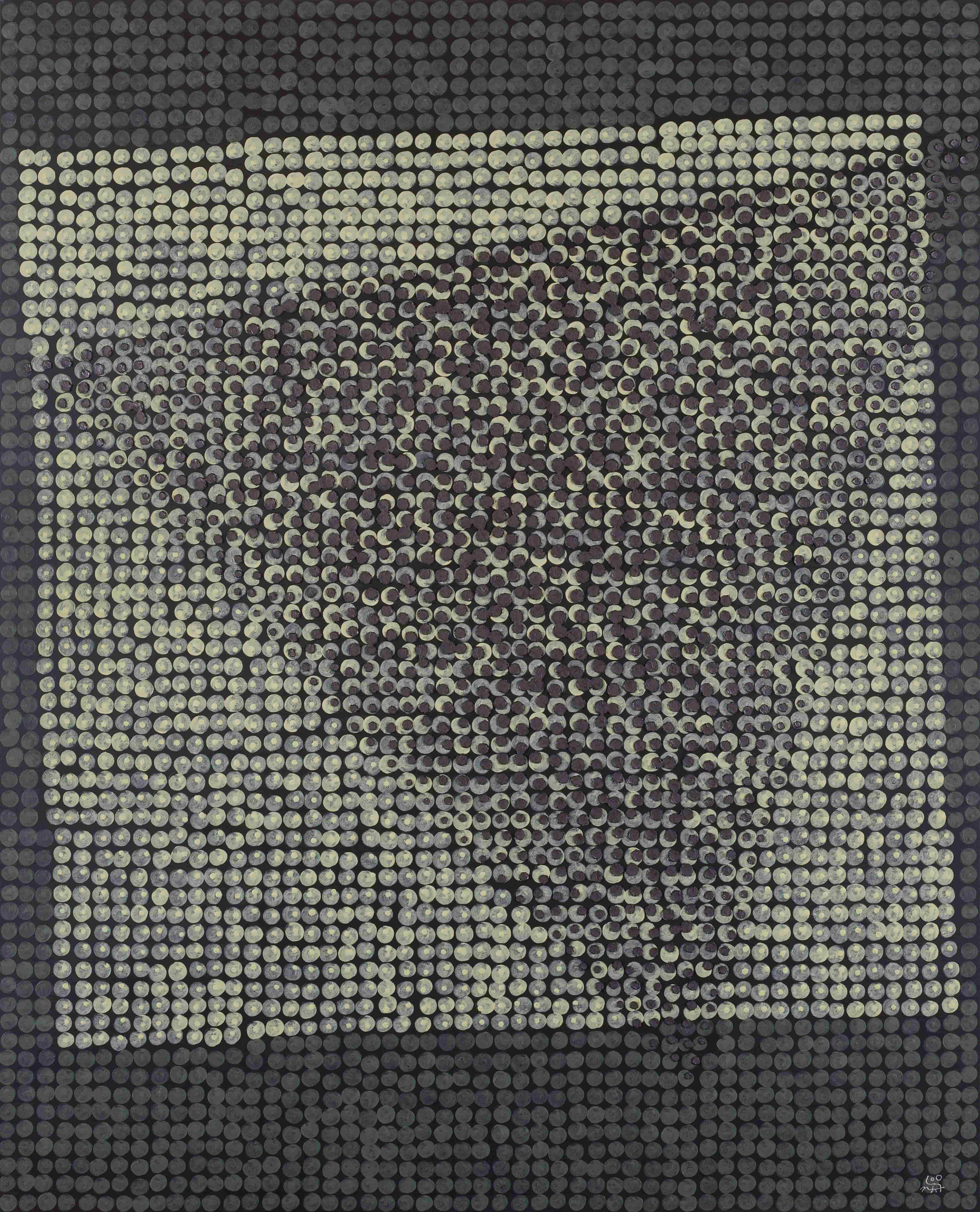 Soonik Kwon|Absence of Ego-Mirage (13-09)|2012|Mixed media|162.2 x 130.3 cm|© Soonik KwonConclusion: Forged at the Golden Horse, Setting Sail into the Wind
Through ALIEN Art Centre – Golden Horse Contemporary Art Museum, Ho Kan and Soonik Kwon have come together in this exhibition. Throughout the curatorial process, I was deeply struck by both the parallels and contrasts in their lives and practices. Both chose abstraction as their language, both navigate themes of time and space, and both began life under challenging circumstances — yet today, each enjoys the support of devoted partners and dedicated collectors. Their paths diverge in telling ways: Ho Kan lived in Italy for fifty years before returning to his homeland; Kwon has traveled globally with over thirty solo exhibitions yet remains firmly rooted in Korea. Ho Kan resides in vibrant Taipei; Kwon spends much of his time in his remote Yangju studio. Ho Kan is deeply versed in Western classical music; Kwon listens to Buddhist chants while working. Ho Kan favors intuitive, spontaneous creation; Kwon plans meticulously, drafting studies before committing to the canvas. Brought together at the Golden Horse, these two remarkable artists resonate in dialogue — each amplifying his individuality while sowing new seeds, setting sail toward a future rich with possibility.
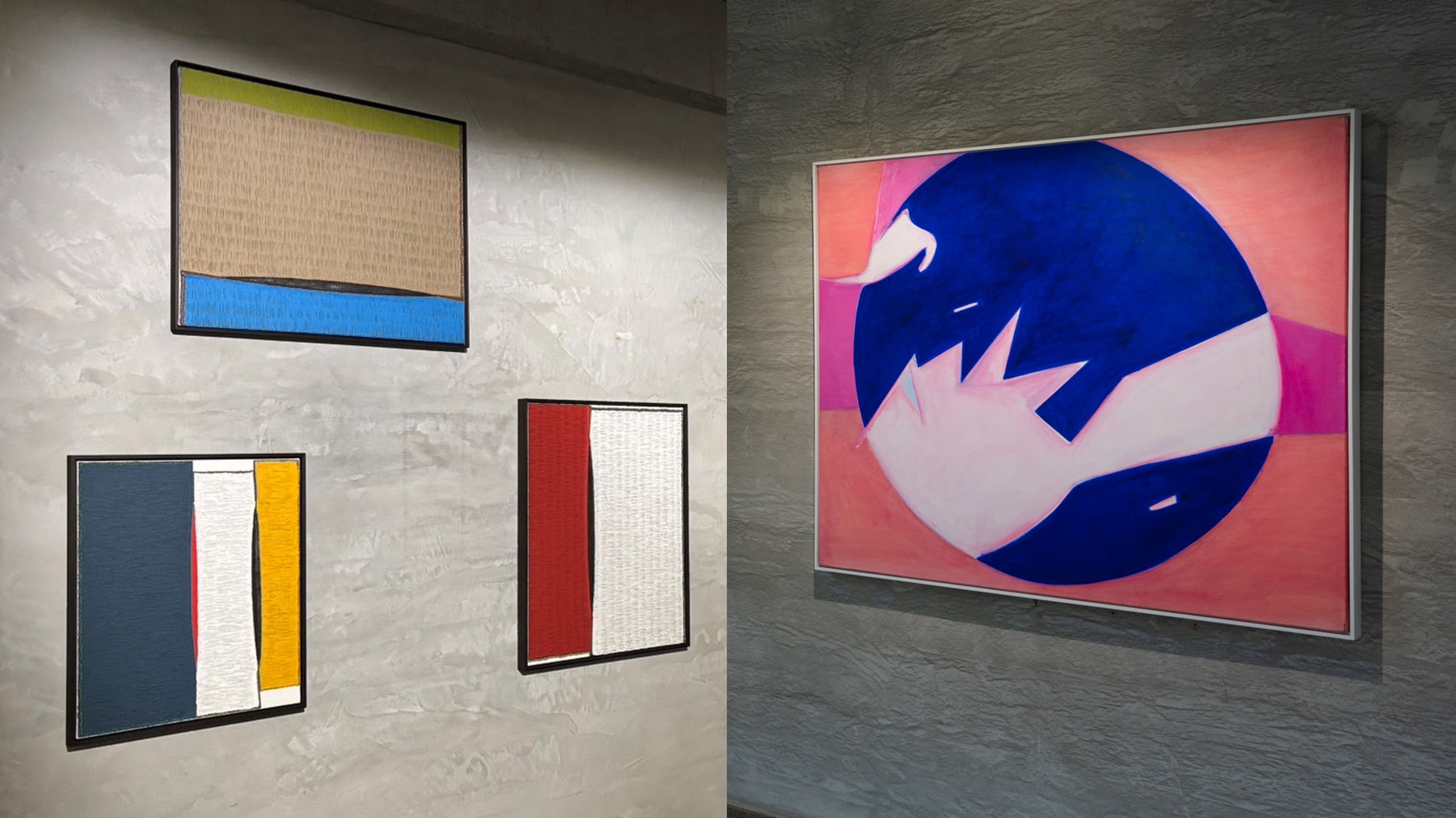 The Bards of Time and Space|Installation View Details|ALIEN Art Centre, 3F|© ALIEN Art Centre
Felix Kwok Academic Advisor at the Training Center of the Academy of Arts & Design, Tsinghua University, Beijing, and founder of Art Strategy. Formerly Director and Head of Modern Art at Sotheby’s Asia. In 2024, he was named one of the Most Influential People in the Art World by The Observer (New York). In this curatorial project, Kwok examines the development of contemporary Asian art from a global, multi-perspective framework.