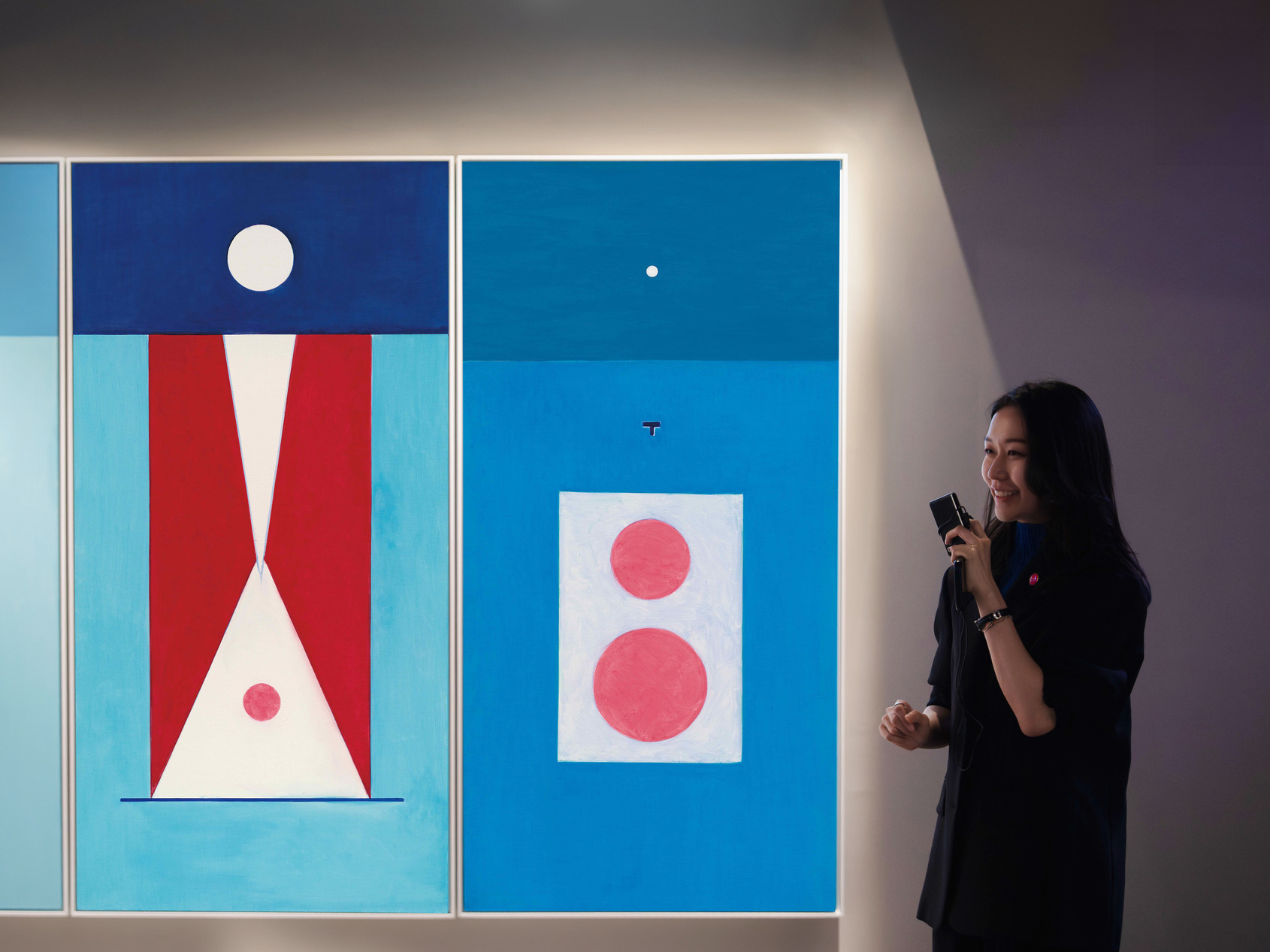
The shape of space, the rhythm of time — as dots resonate and dissolve into eternity.
This exhibition unfolds as a dialogue that transcends generations and geographies. After returning from Italy, Ho Kan developed a visual language of luminous color planes and geometric compositions, exploring poetry within rationality. Korean artist Soonik Kwon, through flowing brushwork and layered textures, materializes the concept of qi upon the canvas. Though belonging to different eras, both artists approach abstraction as a way of seeing the world — a spiritual space where simplicity holds profound poetic resonance.
Ho Kan and Soonik Kwon, strangers to one another in life, nevertheless share deep-rooted connections to East Asian civilization. Having experienced the turbulence of similar historical moments across different regions, their reflections on space and time respond directly to the mission of ALIEN Art Centre since its opening in 2018: to cultivate heightened sensory awareness through thematic exhibitions, allowing viewers to draw elements that bring positive transformation into everyday life.
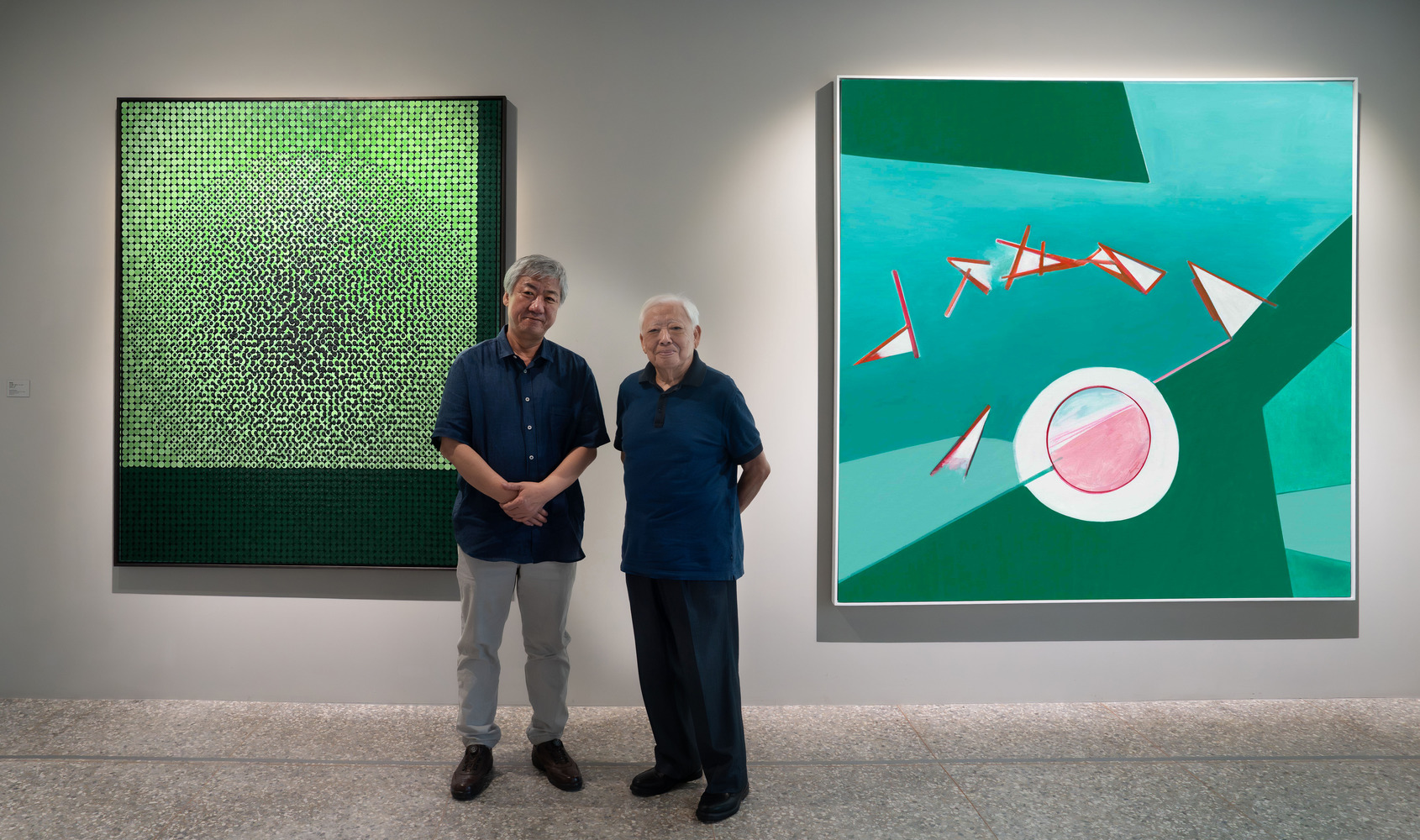 The Bards of Time and Space|Installation View|Left: Soonik Kwon ; Right: Ho Kan|ALIEN Art Centre, 2F|© ALIEN Art Centre
 In this exhibition, ALIEN Art Centre reactivates the core meaning of “abstraction” within an East Asian context. Abstraction here is not merely a formal language, but a way of living. The tension between the two artists releases abstraction from historical confinement and returns it to the immediacy of perception — where viewers’ breath, bodily awareness, and emotional fluctuations extend the works themselves.
The Bards of Time and Space — Ho Kan, Soonik Kwon presents 72 works spanning seventy years (1955–2025), including paintings, object installations, and rare early manuscripts. The exhibition runs from November 23, 2025 to November 1, 2026, and throughout its duration will expand into international exchanges, emerging artist initiatives, and children’s art education through a series of public programs.
 The Bards of Time and Space|Installation View|ALIEN Art Centre, 3F|© ALIEN Art CentreThe Bards of Time and Space.
 This exhibition invites viewers to enter memory and spirituality through the act of seeing. By shifting layers of perception, it reconnects audiences with the ongoing spiritual lineage of East Asian abstraction. It is not only a dialogue of ideas, but also a journey inward — a voyage toward the inner cosmos.
The exhibition unfolds across five chapters:
'The Order of Form. The Flow of Qi.’ 'Revisiting East Asian Abstraction.’ 'From Stillness to Movement:Dots, Squares, Triangles’ 'Between Form and Qi:The Gateway to Eternity’ 'Painting as the Bridge Between Us’ Even those unfamiliar with abstract art are guided by spatial flow, lighting, and furniture placement to experience resonance through bodily perception — leaving with a sense that something within has quietly opened.
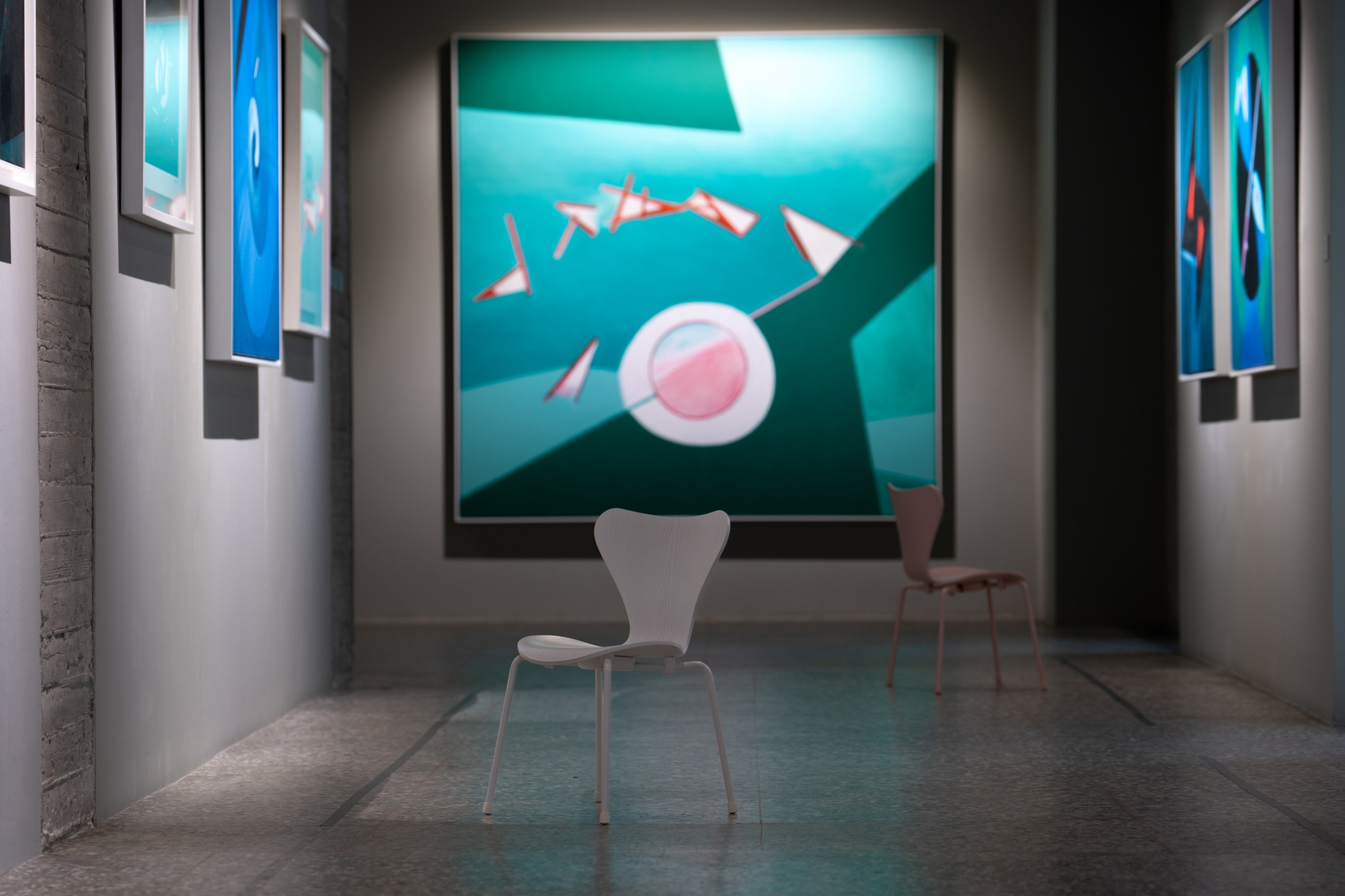 The Bards of Time and Space|Installation View|ALIEN Art Centre, 2F|© ALIEN Art CentreThe Order of Form. The Flow of Qi.
Ho Kan’s minimalist geometric compositions initiate a modern visual language rooted in Eastern sensibility. He regarded artistic creation as a condensation of spirituality, allowing the order of form to become a path inward. His meditative minimalism explores the cultivation of subconscious awareness and accumulated experience — a sensibility that continues to influence how we see, design, and structure the world today.
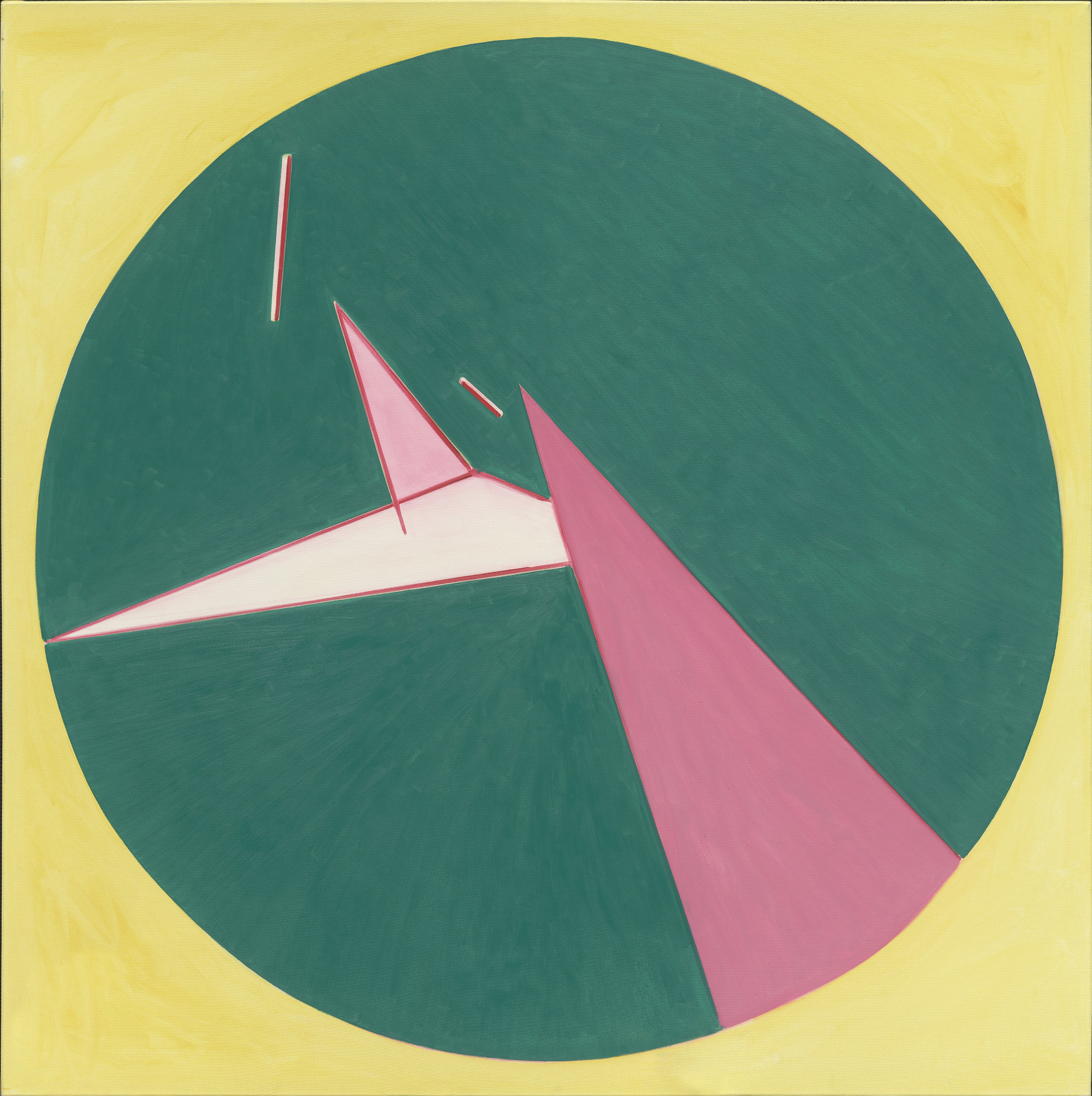 Ho Kan|Development 36|2010|Oil on canvas|160 x 160 cm|© Ho Kan
 Soonik Kwon’s meditative pointillism allows light to flicker between breaths. His works occupy the threshold where material meets time, and thought encounters sensation. The repeated acts of dotting, layering, and rubbing graphite into a sheen are not formal repetition, but a meditative clearing of the self — a discipline through which traces of existence quietly emerge.
Though separated by generation and culture, both artists converge on abstraction as a way of sensing existence — not as outward observation, but as inward cultivation.
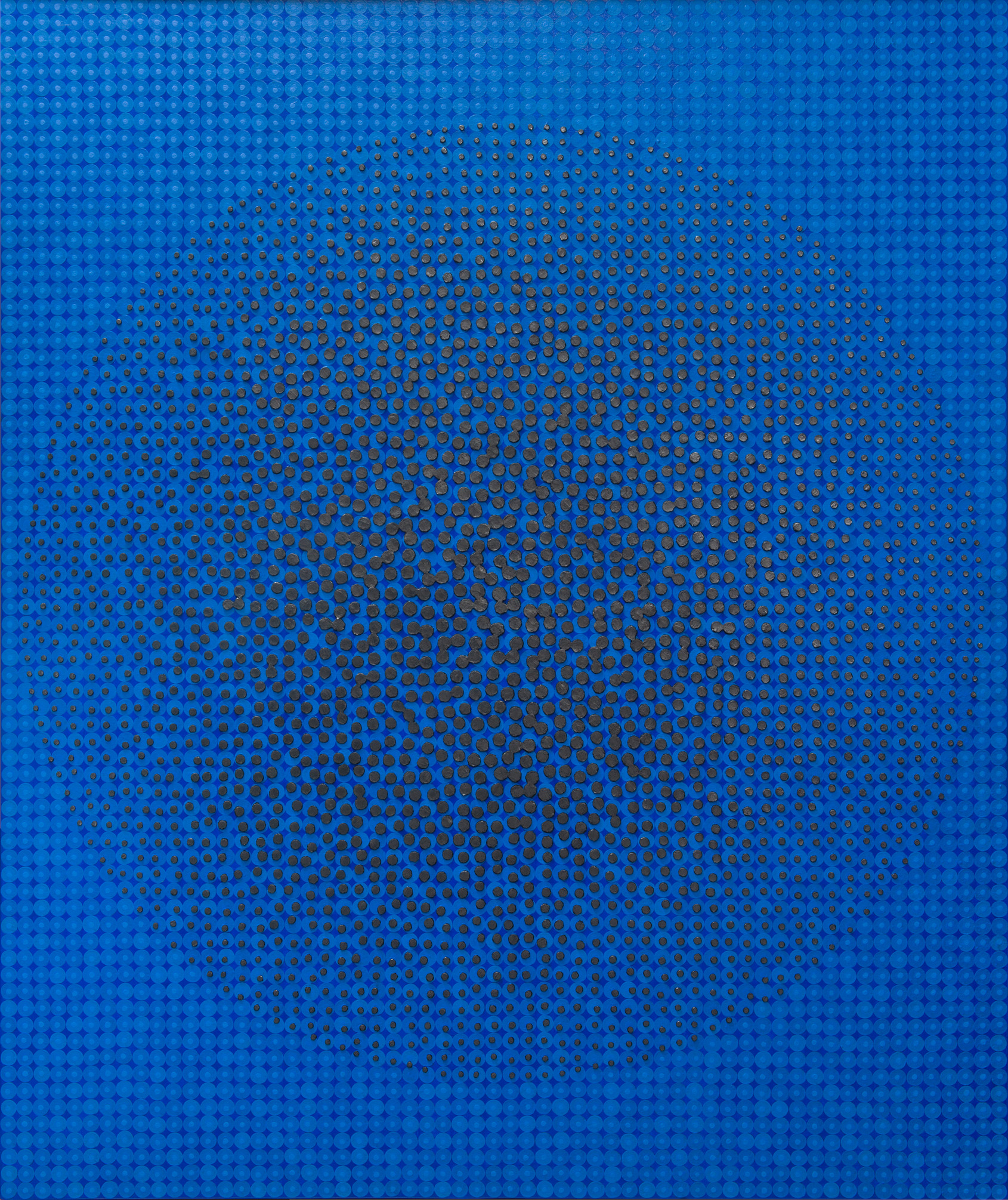 Soonik Kwon|Mirage (2-01)|2023|Mixed media|180 × 150 cm|© Soonik Kwon Revisiting East Asian Abstraction — The Aesthetic Resonance of Chinese Character Forms
Ho Kan drew inspiration from the spatial structure of Chinese characters, opening new trajectories of thought. Through color construction, diagonal lines, and asymmetrical forms, he generates a sense of three-dimensionality within two-dimensional space. His subtractive approach seeks the poetic essence of form, where every line and spatial relationship is meticulously considered — akin to a calligrapher’s brushstroke.
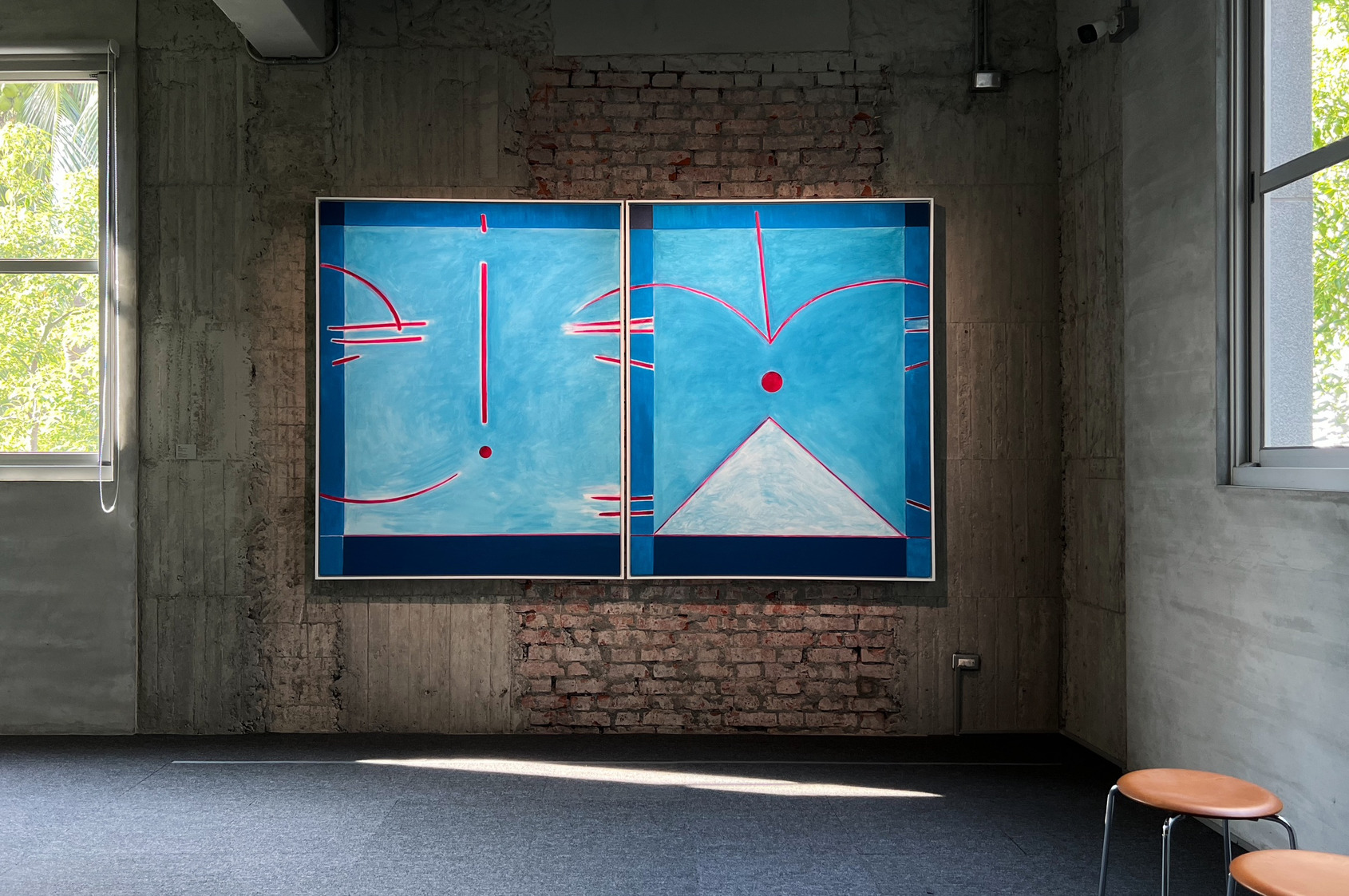 The Bards of Time and Space|Installation View|ALIEN Art Centre, 2F|© ALIEN Art CentreRevisiting East Asian Abstraction — Merging with Space, Reflecting the Self and the World
Soonik Kwon applies graphite onto roof tiles, engaging in repetitive acts of self-emptying to evoke a quiet resonance — proof that response can emerge even within silence. Though materially tangible, graphite and tile embody the intangible presence of time, compressed into latent energy. Their dark surfaces emit subtle light, holding personal memory and unspoken messages, inviting viewers to see darkness as light, matter as mind.
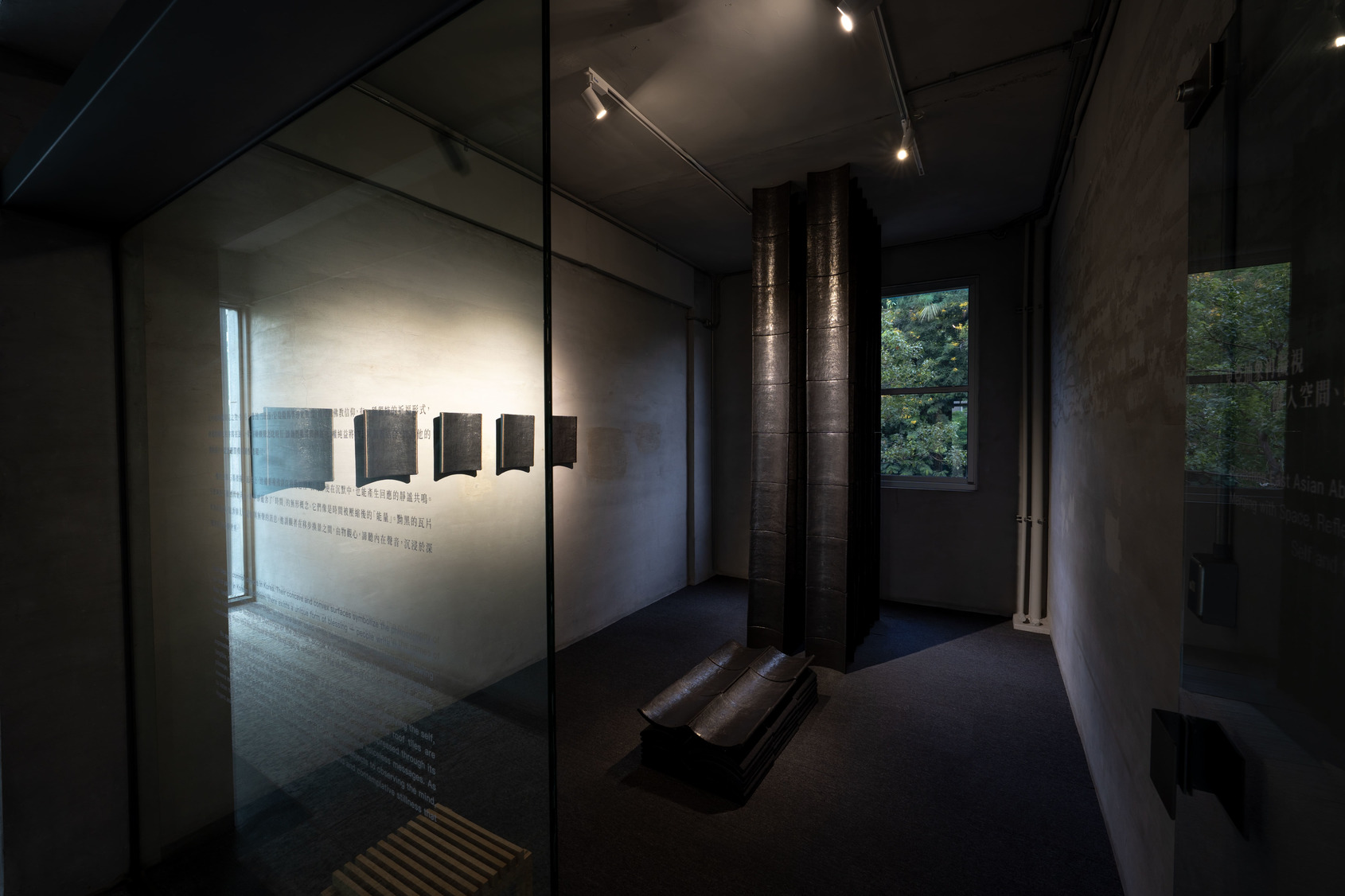 The Bards of Time and Space|Installation View|ALIEN Art Centre, 2F|© ALIEN Art Centre
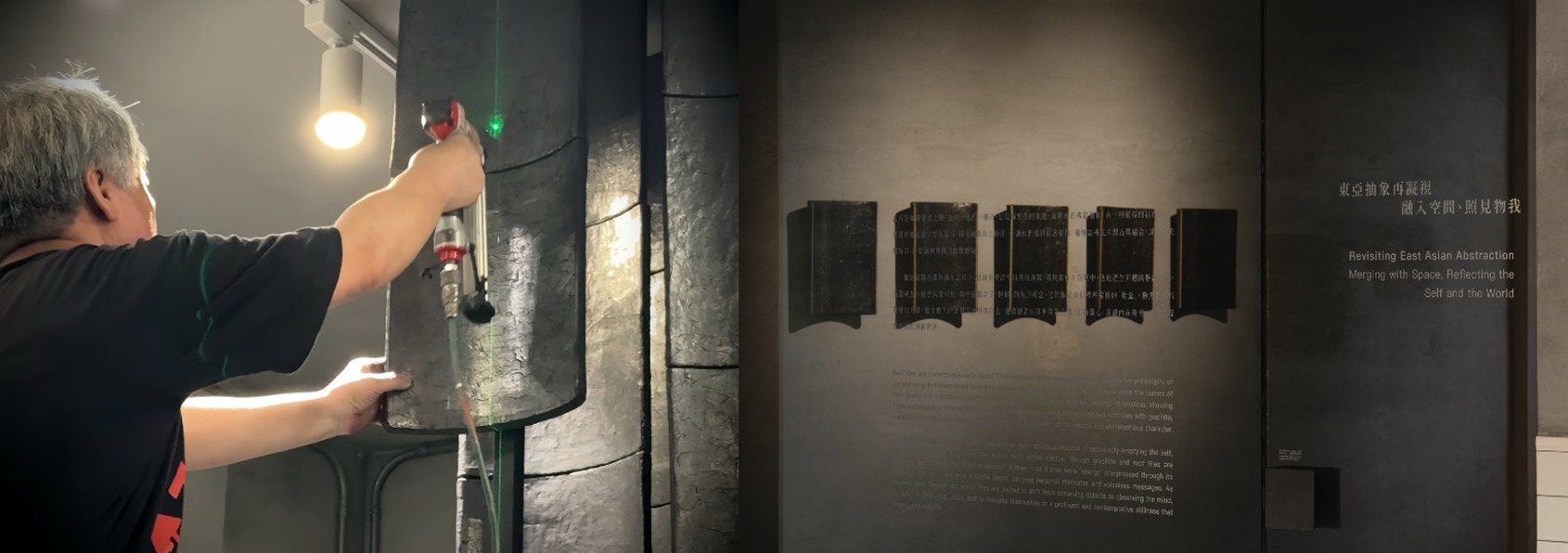 Left: Soonik Kwon|On-Site Documentation|© Soonik Kwon
Right: The Bards of Time and Space|Installation View|ALIEN Art Centre, 2F|© ALIEN Art CentreFrom Stillness to Movement:Dots, Squares, TrianglesFor Ho Kan, the length of a line, the size of a dot, and the depth of color parallel musical composition. He likened the artist to a conductor, orchestrating atmosphere and emotional rhythm. Through dots, squares, triangles, and short lines, he evokes cosmic perception and the Eastern pursuit of harmony — a longing toward the infinite universe.
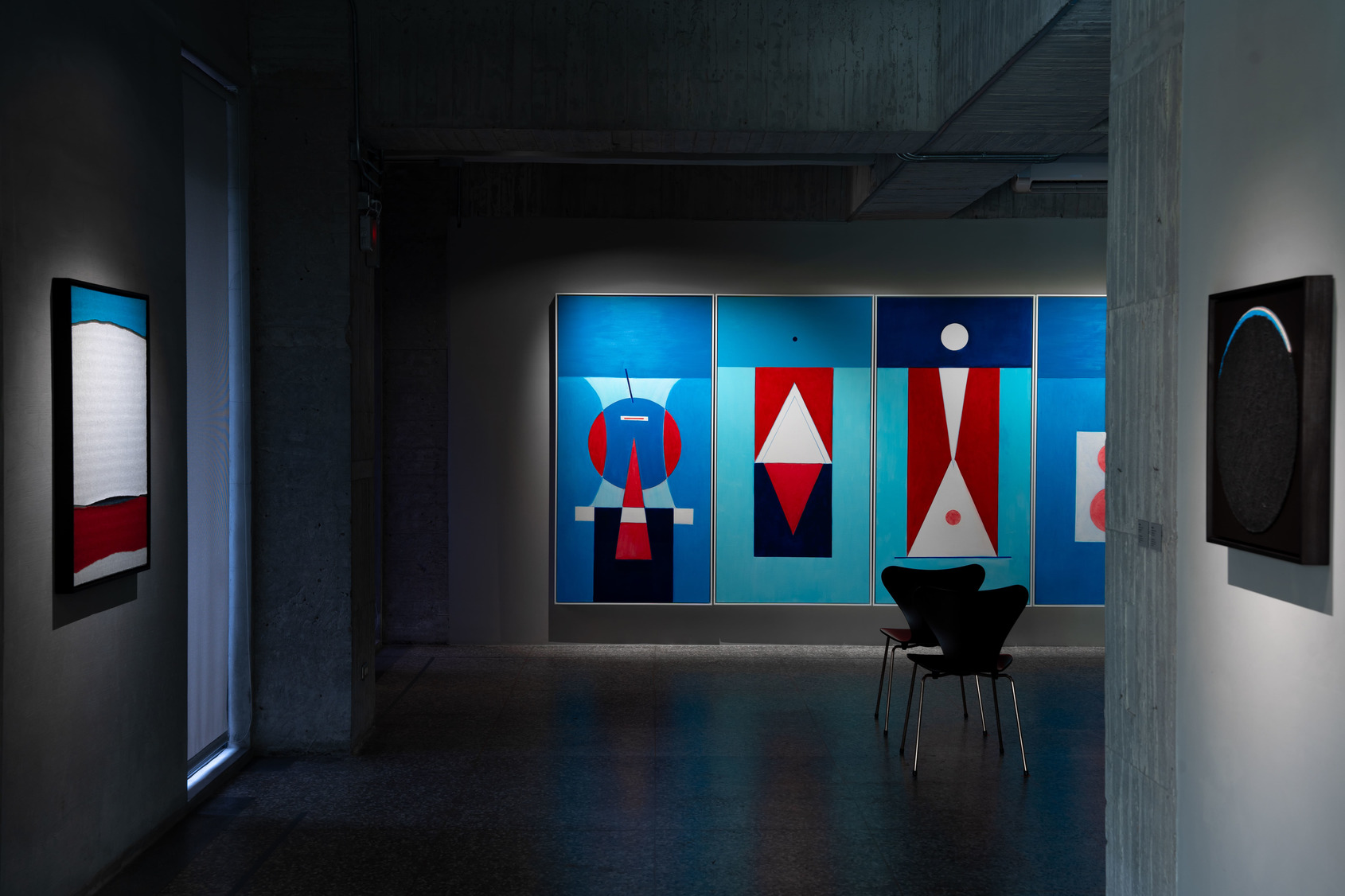 The Bards of Time and Space|Installation View|ALIEN Art Centre, 2F|© ALIEN Art Centre
Soonik Kwon treats creation as spiritual practice. Through accumulation and abrasion, he approaches awakening. Circles, squares, and triangles symbolize heaven, earth, and humanity, sometimes receding into the background, sometimes emerging abstractly. By mixing soil into pigment, color becomes a vessel of time and memory — a repository of childhood impressions and lived experience.
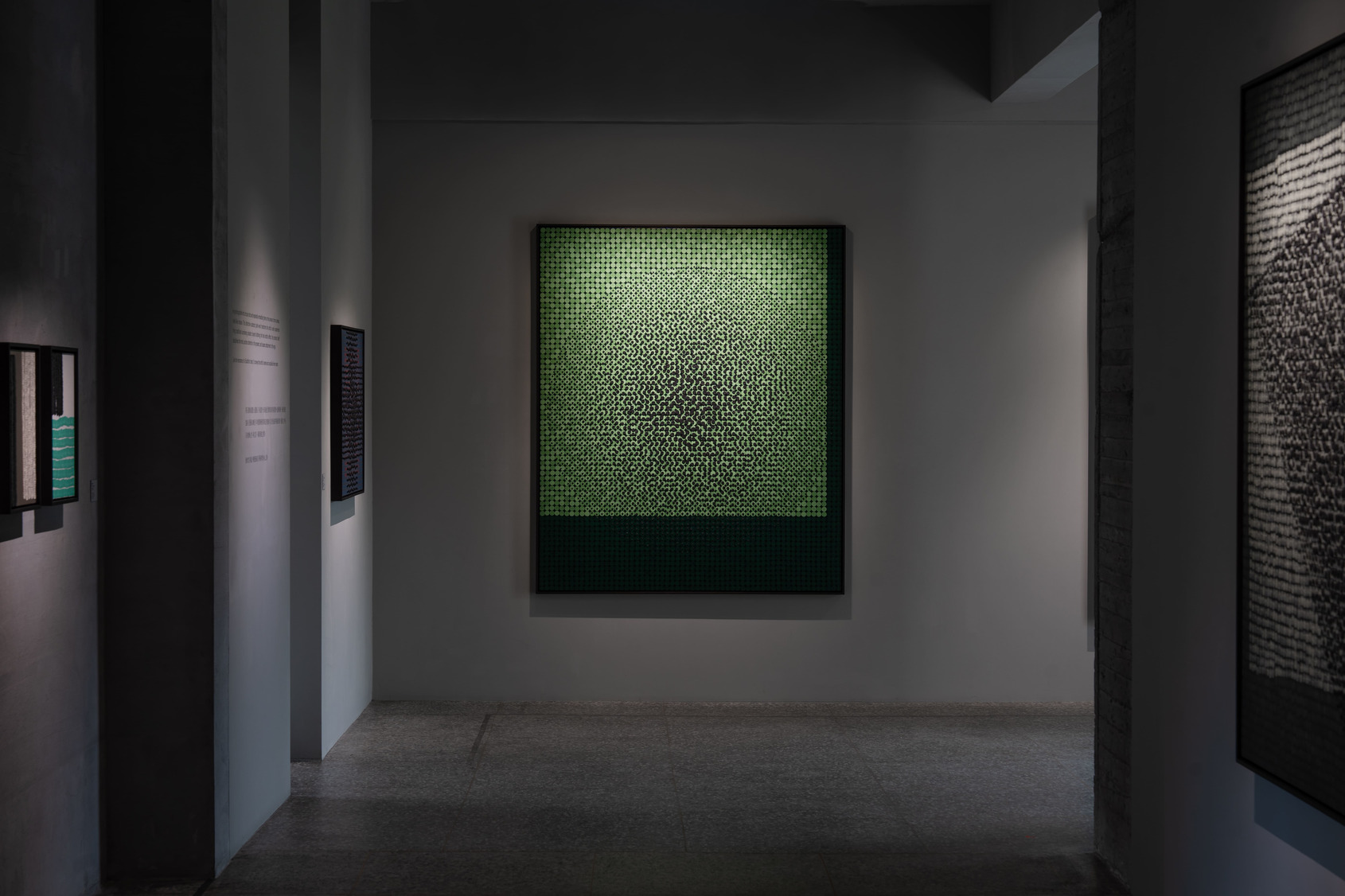 The Bards of Time and Space|Installation View|ALIEN Art Centre, 2F|© ALIEN Art Centre
Ho Kan’s time is crystallized; Soonik Kwon’s time flows. Their dialogue forms a harmonious tension, inviting viewers to move between gravity and weightlessness — sensing the relationships among heaven, earth, humanity, and layered spatial dimensions through breath and rhythm.
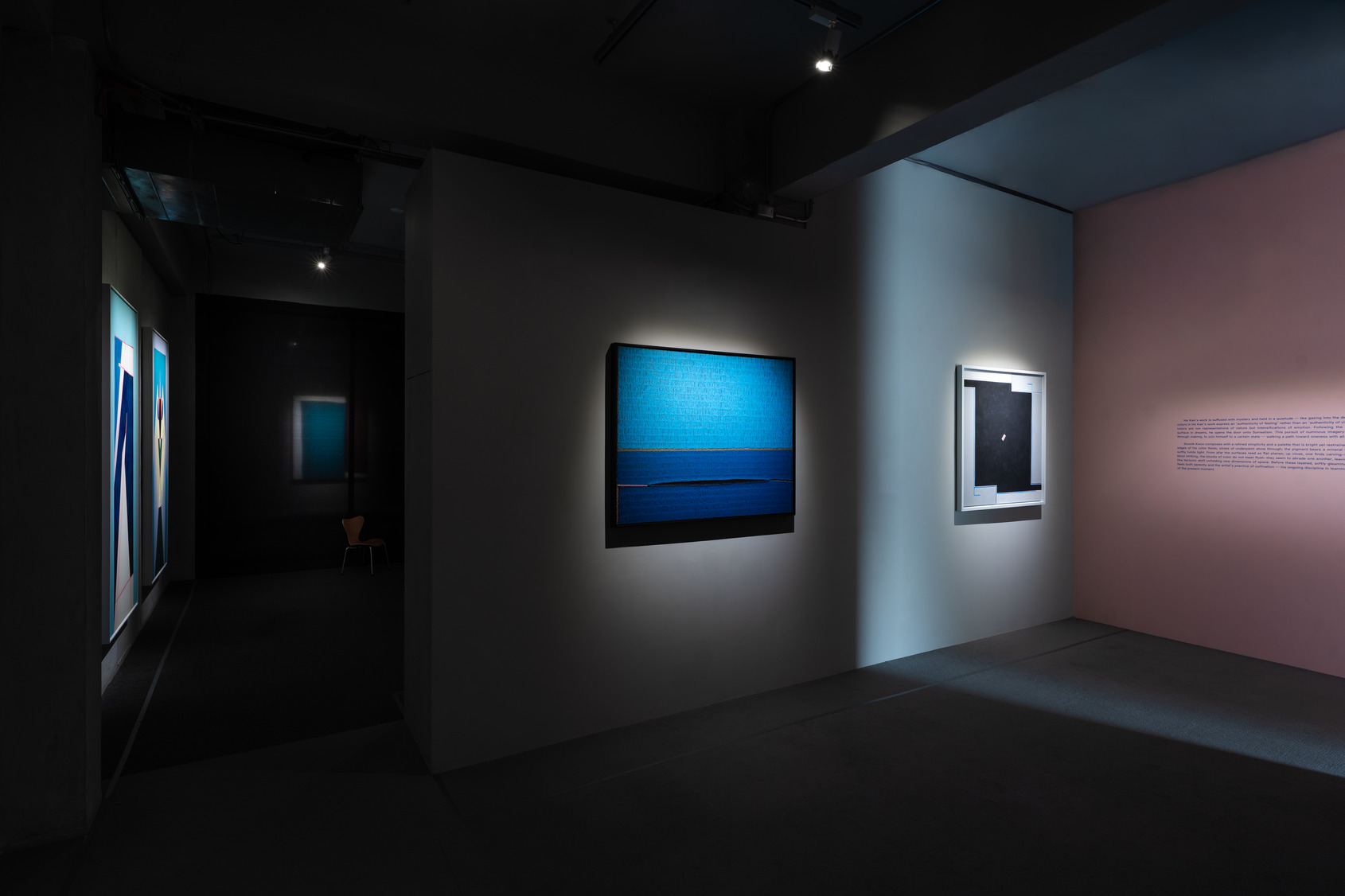
Between Form and Qi:The Gateway to EternityPassing through a narrow pink threshold, Ho Kan’s works appear as surreal landscapes — finite yet tending toward infinity, minimalist yet abundant. They emanate a quietude akin to gazing into deep seas. Soonik Kwon’s layered strokes create interstices — traces of events where trauma and healing intertwine. These gaps are not static ruptures, but dynamic boundaries where past and future converge in the present moment. What appears quiet ripples outward, like a stone cast into still water. Here, abstraction is not an escape from reality, but a deeper entry into it — revealing a spiritual realm beyond visibility.
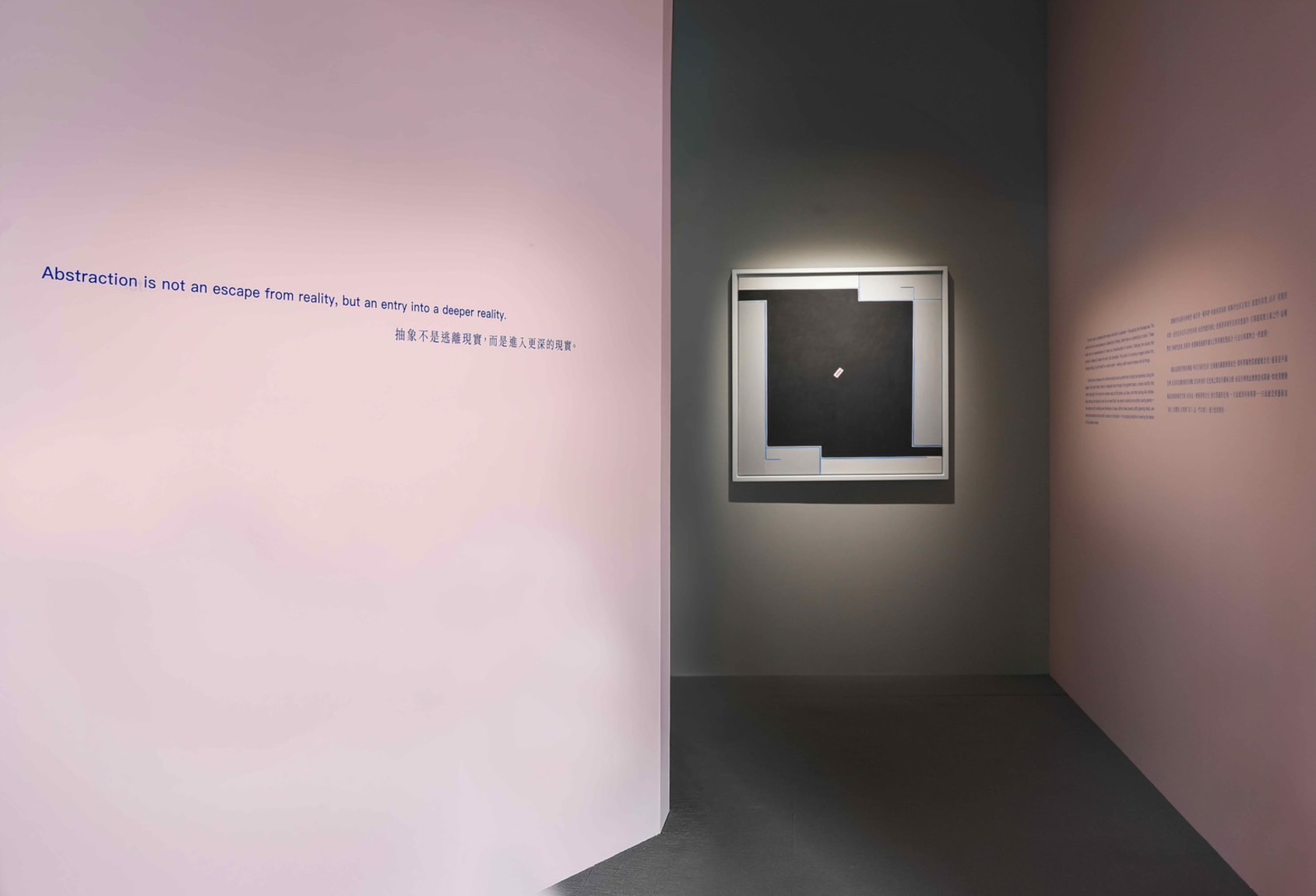 The Bards of Time and Space|Installation View|ALIEN Art Centre, 3F|© ALIEN Art Centre
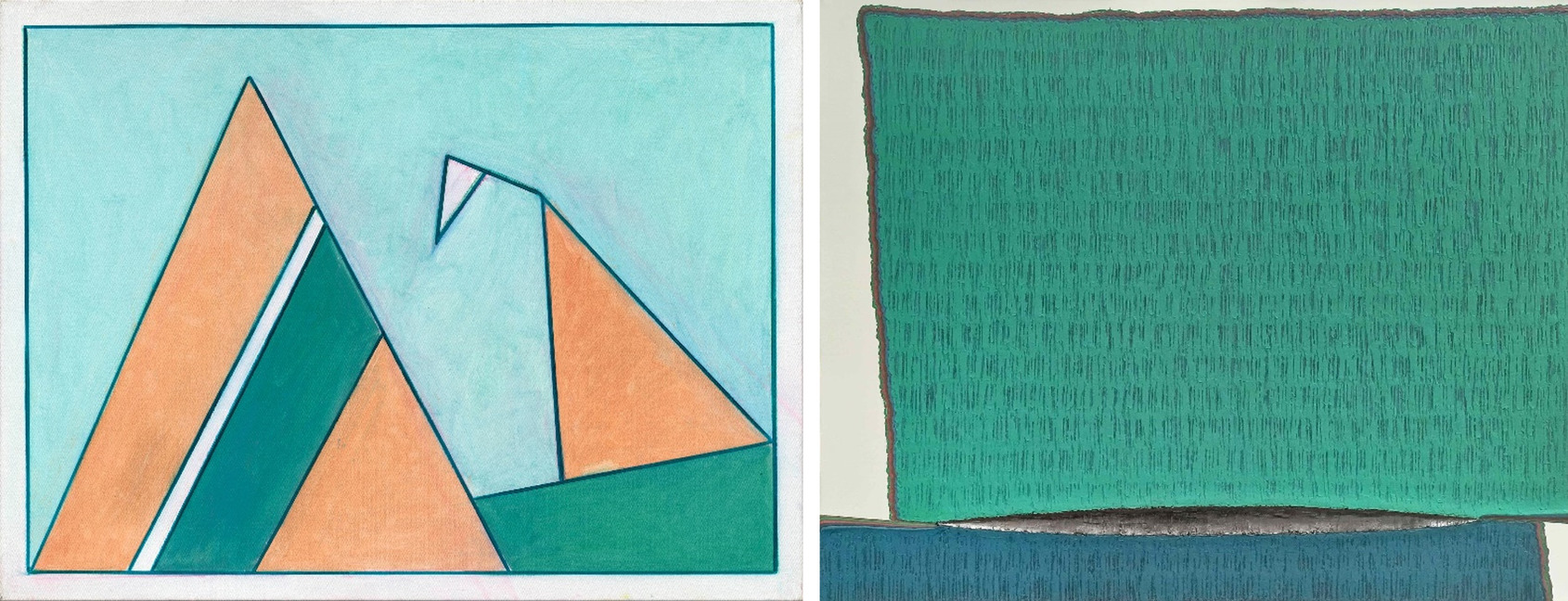 Left: Ho Kan|Abstract 2015-052|2015|Oil on canvas|97 × 130 cm|© Ho Kan
Right: Soonik Kwon|Interstice-Pile up & Rub (7-04)|2025|Mixed media|90.9 × 72.7 cm|© Soonik KwonSilence here is not inertia, but immersion reached through deep introspection — a rebalancing of the inner self. Abstraction becomes a way of entering reality more profoundly.
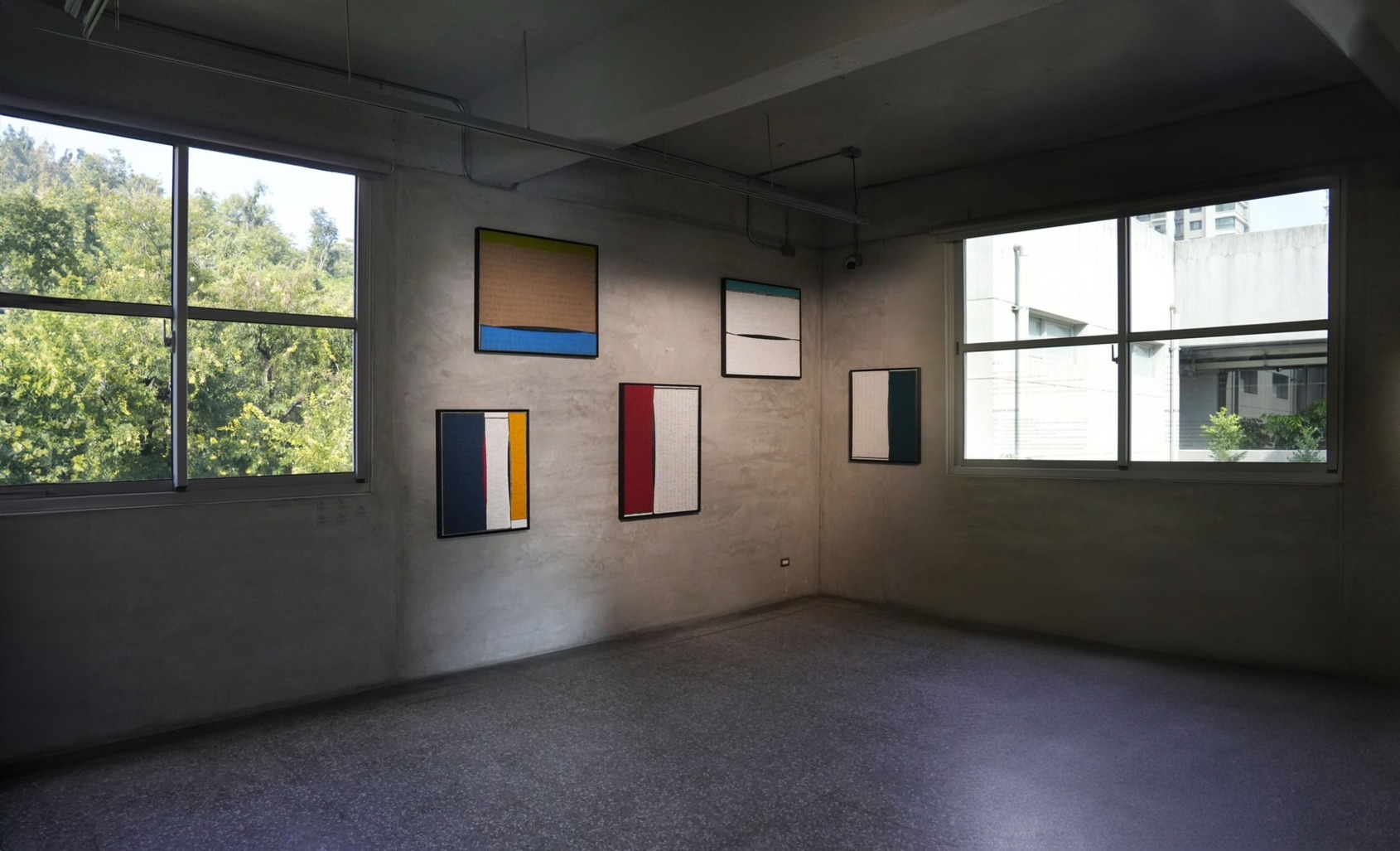
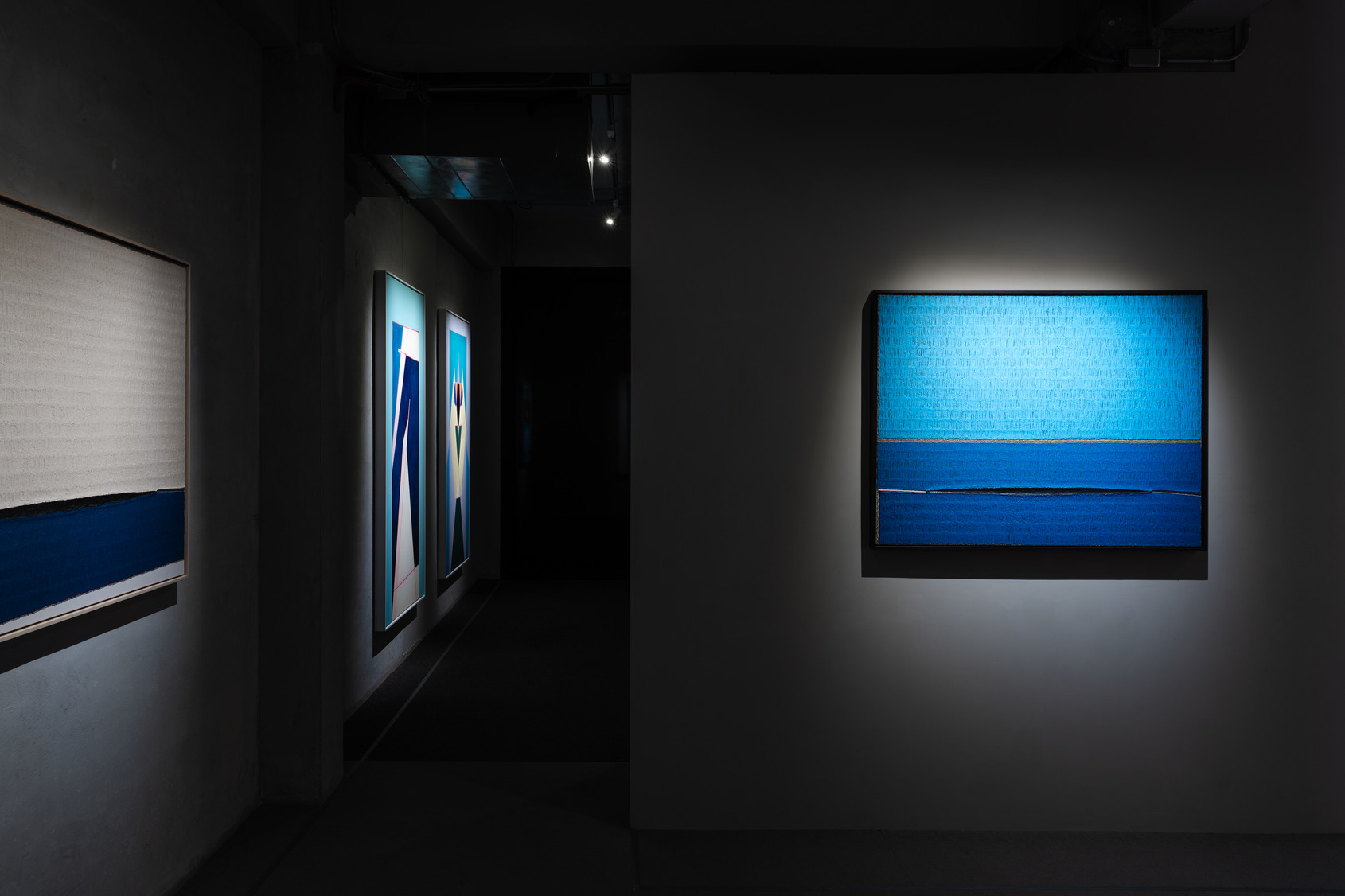 The Bards of Time and Space|Installation View|ALIEN Art Centre, 3F|© ALIEN Art CentrePainting as the Bridge Between Us
The exhibition culminates in a space resembling a moon bridge in a traditional Chinese garden, where the artists’ works frame one another across four walls. Though separated by nearly thirty years, Ho Kan and Soonik Kwon embody two pivotal stages of Asian abstract art, revealing timeless resonance beyond temporal and spatial boundaries.
Ho Kan discerned spiritual minimalism within Kwon’s spaces, while Kwon was drawn to the density of time and existence in Ho Kan’s paintings. Together, their works release a shared spiritual depth that invites contemplation of being beyond time and space.
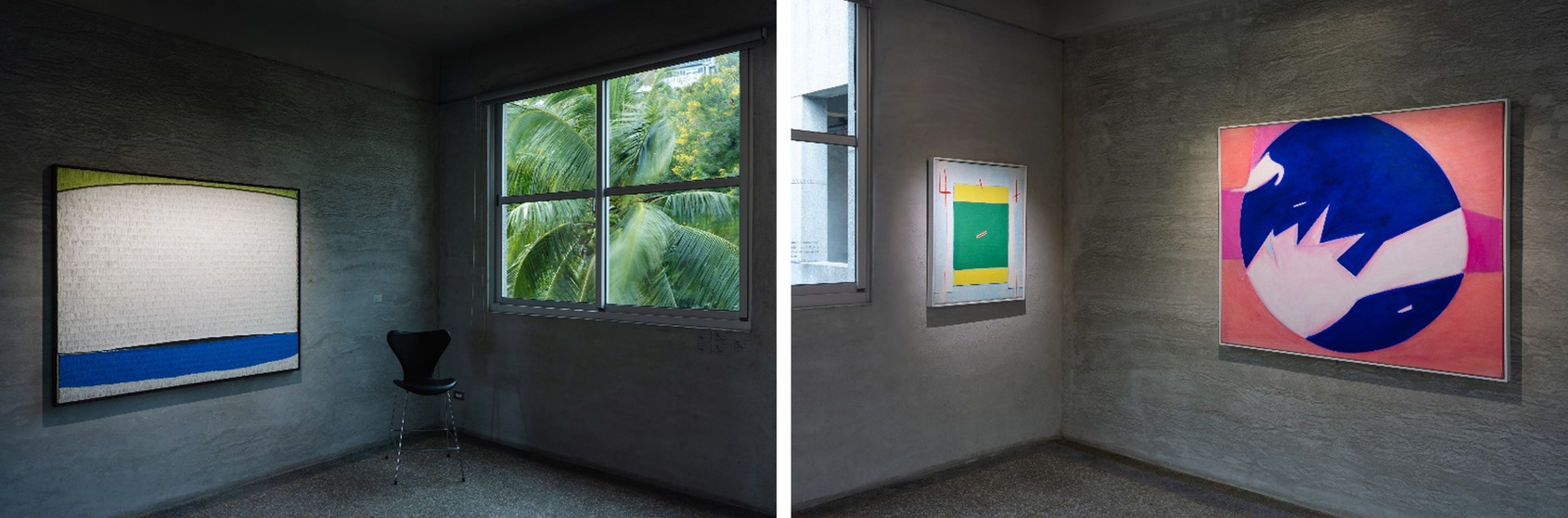 The Bards of Time and Space|Installation View|ALIEN Art Centre, 3F|© ALIEN Art Centre
Ho Kan and Soonik Kwon respectively mark two pivotal phases in the development of contemporary Asian art. Emerging in the 1950s, Ho Kan is widely regarded as a pioneer of Chinese geometric abstraction. Soonik Kwon, who rose to prominence in the 1980s and 1990s, represents a generation that synthesized, refined, and elevated the diverse experimental trajectories of Asian modernism.
Ho Kan arrived in Taiwan during an era of war and upheaval, directly experiencing the ruptures and displacements brought about by cultural migration. These formative life experiences profoundly shaped his artistic practice, leading him to pursue an abstract language capable of transcending geographical and cultural boundaries. In contrast, Soonik Kwon grew up in postwar South Korea amid rapid modernization. While postwar Korean monochrome painting tended toward restraint and rational clarity, Kwon’s work places greater emphasis on material texture and tactility. Through the expansion of multiple spatial perspectives, his practice generates a continuously unfolding sense of vitality and life force.
Within an increasingly pluralistic global art landscape, the practices of these two artists unfold as a cross-generational and cross-regional dialogue of ideas. Their works invite us to reconsider how deeper philosophical foundations can be drawn from one’s own cultural context, and how such foundations may serve as a basis for participating in international aesthetic discourse. It is hoped that this exhibition will offer a more expansive vision of Asian abstract art, allowing viewers to genuinely sense the essence of existence within the language of abstraction.
Yaman Shao Director and Chief Curator of ALIEN Art Centre, is deeply engaged with the evolving currents of contemporary art. Her curatorial approach centers on “speaking through space,” orchestrating artworks, materials, and spatial layout to guide viewers in experiencing layered dimensions — of time, physicality, and spirit. In Dust and Gold, she places materiality at the core. Drawing from the creative practices of Makoto Fujimura and Shozo Michikawa, she demonstrates how art embodies the power to restore, heal, and transform. To Yaman, art is not merely a medium of creation — it is a way to understand the world and reshape perception. Through thoughtful spatial design and thoughtful arrangement of works, she encourages viewers to engage with the exhibition at different rhythms, from varied angles and emotional stances — creating a resonance between art and audience.